Introduction
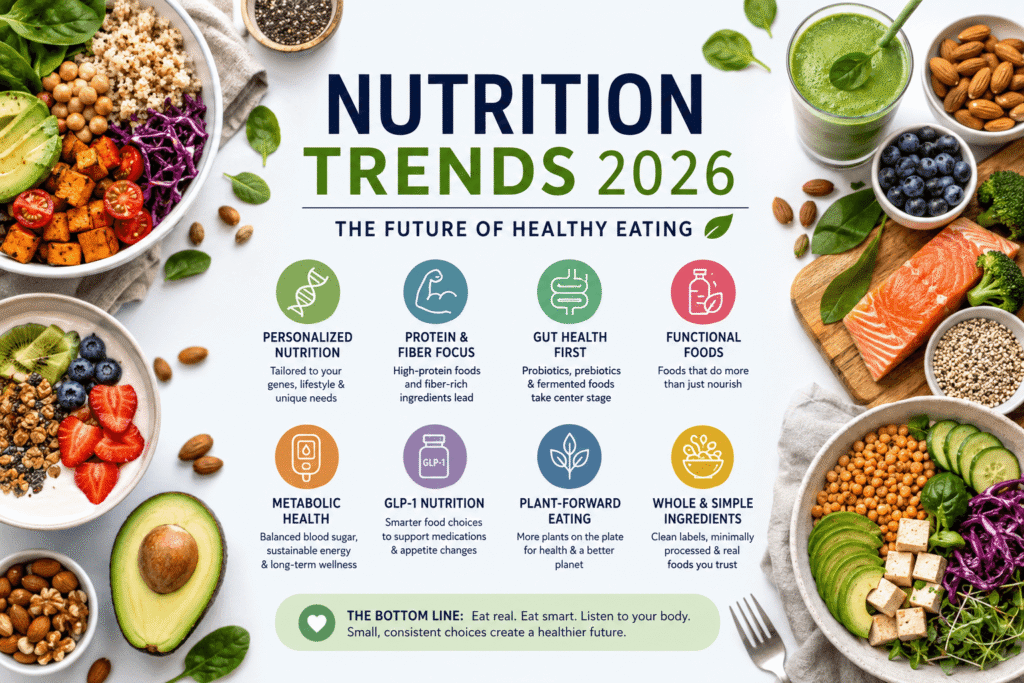
Nutrition Trends 2026 are moving beyond restrictive diets and short-term weight-loss challenges. The bigger shift is toward eating patterns that support protein intake, fiber, gut health, metabolic health, personalization, convenience, and long-term wellness.
For readers across the USA, Canada, Europe, and the UK, this means the healthiest food choices may increasingly be less about following one “perfect” diet and more about building meals around nutrient-dense foods that fit individual needs.
At the same time, the food industry is responding quickly. High-protein products, functional beverages, personalized nutrition tools, gut-friendly foods, and products designed around changing appetite and metabolic-health goals are becoming more visible.
So, which trends actually deserve your attention?
This guide explores the most important Nutrition Trends 2026, explains what they mean, and shows how to use them without falling for unnecessary hype.
Table of Contents
- Why Nutrition Trends 2026 Matter
- Personalized Nutrition Is Becoming More Important
- Protein and Fiber Are Taking Center Stage
- Gut Health Remains a Major Nutrition Priority
- Functional Foods Are Going Mainstream
- Metabolic Health Is Changing How People Eat
- GLP-1 Nutrition Is Influencing Food Choices
- Whole Foods and Simpler Ingredients Are Back
- Sustainable and Plant-Forward Eating
- How to Apply Nutrition Trends 2026
- Common Mistakes to Avoid
- 2026 Nutrition Checklist
- FAQ
- Conclusion
Why Nutrition Trends 2026 Matter
Food trends can be entertaining, but nutrition trends can also influence real purchasing and eating decisions.
The important distinction is between a temporary food craze and a trend supported by sensible nutrition principles.
The World Health Organization continues to emphasize dietary adequacy, balance, moderation, and diversity, with minimally processed foods, vegetables, fruits, whole grains, pulses, nuts, seeds, and nutritious protein sources forming the foundation of a healthy diet.
That gives us a useful filter: a new trend is more worthwhile when it helps people eat a more balanced diet rather than simply encouraging another restrictive rule.
Nutrition Trends 2026: Personalized Nutrition
One of the most interesting Nutrition Trends 2026 is the move toward personalized or precision nutrition.
Instead of assuming the same meal plan works for everyone, personalized nutrition considers factors such as:
- Age and life stage
- Activity level
- Food preferences
- Lifestyle
- Dietary patterns
- Metabolic characteristics
- Potentially, microbiome or genetic information
New research continues to explore how genetics, microbiome data, metabolic information, and digital tools could eventually help create more individualized dietary recommendations. However, the science is still developing, and not every commercial personalization test has strong clinical evidence behind it.
What this means for everyday eaters
You do not need an expensive genetic test to personalize your diet.
Start with simple questions:
What foods help me feel satisfied? What meals fit my schedule? Am I getting enough protein, fiber, fruits, vegetables, and healthy fats?
Personalization should make healthy eating more practical—not more complicated.
Nutrition Trends 2026: Protein and Fiber
Protein has become one of the strongest nutrition themes in 2026, while fiber is receiving increasing attention alongside it.
This combination makes sense.
Protein contributes to maintaining muscle and supports satiety, while fiber supports digestive health and helps make meals more filling.
Current food-industry trends show strong interest in protein-rich products, while consumers are also paying more attention to fiber, probiotics, and nutrient density.
Easy protein and fiber combinations
Try meals such as:
- Greek yogurt with berries and chia seeds
- Eggs with whole-grain toast and vegetables
- Lentil soup with a side salad
- Salmon with vegetables and brown rice
- Beans with quinoa and roasted vegetables
- Chicken with whole-grain pasta and broccoli
The goal is not to chase extremely high protein numbers. Instead, build balanced meals that combine protein with fiber-rich plant foods.
Nutrition Trends 2026: Gut Health
Gut health continues to influence everything from food choices to product development.
Interest is growing around fiber, fermented foods, prebiotics, probiotics, whole grains, fruits, vegetables, beans, and diverse plant foods.
Research suggests that dietary patterns rich in fermentable fiber can influence gut microbial functions and may support metabolic health.
A simple gut-friendly plate
Instead of buying every product labeled “gut health,” start with basic foods:
- Oats
- Beans and lentils
- Berries
- Apples
- Vegetables
- Whole grains
- Nuts and seeds
- Yogurt or other fermented foods, when suitable
More variety can be more useful than relying on one fashionable ingredient.
4. Functional Foods Are Going Mainstream
Functional foods are products marketed around benefits beyond basic nutrition. In 2026, this category includes protein foods, probiotic products, fortified beverages, collagen products, and drinks positioned around areas such as energy, digestion, immunity, or cognitive wellness.
Industry reporting from 2026 highlights protein, gut health, personalization, metabolic health, and multifunctional beverages as major areas of food innovation.
But “functional” does not automatically mean “better.”
Read the nutrition label
Before buying a functional product, check:
- Protein
- Fiber
- Added sugar
- Sodium
- Saturated fat
- Serving size
- Ingredient list
A fortified snack can have a place in your diet, but it should not automatically replace nutrient-rich whole foods.
5. Metabolic Health Is Changing How People Eat
Metabolic health is becoming a bigger part of everyday nutrition conversations.
Rather than focusing only on calories or body weight, people are increasingly interested in meals that support steady energy, balanced blood glucose, adequate protein, fiber, and overall dietary quality.
This does not mean everyone needs a low-carbohydrate diet.
Whole grains, fruit, vegetables, beans, and other quality carbohydrate sources remain important components of a balanced diet. WHO guidance recommends that carbohydrates primarily come from foods such as whole grains, vegetables, fruits, and pulses.
A practical approach
Build meals around:
Protein + high-fiber carbohydrate + vegetables or fruit + healthy fat
For example, grilled salmon with quinoa, roasted vegetables, and olive oil creates a more balanced meal than simply eliminating carbohydrates.
6. GLP-1 Nutrition Is Influencing Food Choices
Another major development in 2026 is the growing influence of GLP-1 medications on eating behavior and food product development.
Because these medications can reduce appetite, nutrition conversations increasingly focus on making smaller meals nutrient-dense enough to provide adequate protein, fiber, vitamins, and minerals.
Food companies are responding with products emphasizing protein and specialized nutrition for people using weight-management medications.
However, this is an area where consumers should avoid self-prescribing nutrition strategies based on social media.
If someone uses a prescription weight-management medication, individualized advice from a qualified healthcare professional or registered dietitian can be more appropriate than following generic “GLP-1 diet” trends.
7. Whole Foods and Simpler Ingredients Are Back
Despite the growing number of sophisticated nutrition products, one of the most reliable Nutrition Trends 2026 is surprisingly simple: people are looking for foods with recognizable ingredients.
Whole and minimally processed foods remain the foundation of healthy eating.
That includes:
- Fresh or frozen vegetables
- Fruits
- Whole grains
- Beans and lentils
- Eggs
- Fish
- Lean meats
- Nuts and seeds
- Plain or minimally sweetened dairy foods
Frozen vegetables and canned foods can also be useful options, especially when they contain little added sugar or excess sodium.
8. Sustainable and Plant-Forward Eating
Plant-forward eating is also gaining attention as consumers consider both personal health and environmental impact.
You do not necessarily have to become vegetarian or vegan.
A practical plant-forward approach can mean adding more:
- Beans
- Lentils
- Chickpeas
- Vegetables
- Whole grains
- Nuts
- Seeds
- Fruits
WHO notes that shifting toward more plant-based protein sources may offer health benefits, particularly when replacing some red meat.
This approach can work across different cultures and budgets because it focuses on adding nutritious foods rather than creating an unnecessarily restrictive diet.
How to Apply Nutrition Trends 2026
You do not need to change your entire diet overnight.
Use this simple five-step approach:
Step 1: Upgrade Your Breakfast
Add protein and fiber to your first meal.
For example, choose eggs with vegetables or Greek yogurt with fruit, oats, and seeds.
Step 2: Build Balanced Lunches
Aim for a protein source, vegetables, a high-fiber carbohydrate, and a source of healthy fat.
Step 3: Make Snacks More Nutrient-Dense
Instead of relying on highly processed snacks every day, try fruit with nuts, yogurt with berries, or hummus with vegetables.
Step 4: Increase Plant Variety
Aim to eat a wider range of vegetables, fruits, legumes, whole grains, nuts, and seeds throughout the week.
Step 5: Choose Trends Carefully
Ask one question before following any viral nutrition trend:
Does this make my overall diet more balanced and sustainable?
If not, it may simply be marketing.
Common Nutrition Mistakes to Avoid in 2026
Even useful trends can become unhealthy when taken too far.
Avoid these common mistakes:
- Treating supplements as replacements for a balanced diet
- Buying every product labeled “functional”
- Eliminating entire food groups without a clear reason
- Following social-media nutrition claims without checking evidence
- Obsessing over protein while ignoring fiber and micronutrients
- Assuming expensive foods are automatically healthier
- Confusing “natural” with nutritionally superior
- Using someone else’s personalized diet as your own
- Healthy eating should support your life—not make every meal stressful.
Practical Nutrition Checklist for 2026
Use this quick checklist when planning your meals:
- Include a quality protein source
- Eat vegetables or fruit regularly
- Choose fiber-rich foods
- Include whole grains or other nutritious carbohydrates
- Add healthy fats where appropriate
- Drink enough water
- Limit excess added sugar and highly processed foods
- Read nutrition labels
- Choose variety instead of food repetition
- Follow evidence rather than viral trends
Take the Next Step Toward Better Nutrition
Nutrition does not have to become complicated just because food trends are changing.
At Daily Nutrition Tips, the goal is to help readers turn nutrition information into realistic everyday habits.
Explore more healthy eating guides, nutrition tips, and practical food ideas to build a routine that works for your lifestyle.
Start with one change today—then make it sustainable.
Frequently Asked Questions
What are the biggest Nutrition Trends 2026?
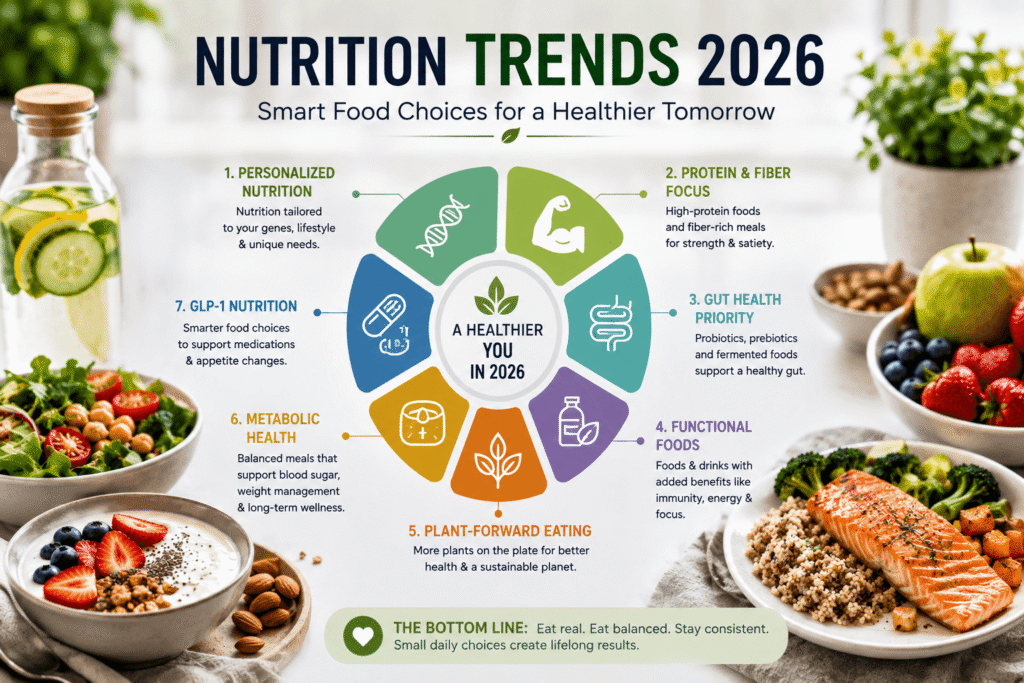
The biggest trends include personalized nutrition, higher interest in protein and fiber, gut health, functional foods, metabolic health, GLP-1-related nutrition, plant-forward eating, and simpler whole-food choices.
Is personalized nutrition worth trying?
Personalized nutrition has promising research behind it, but the field is still developing. Basic factors such as dietary preferences, lifestyle, activity level, and nutritional needs can already help create a more practical eating pattern.
Why are protein and fiber important in 2026?
Protein helps support muscle and satiety, while fiber supports digestive health and contributes to a filling, nutrient-dense diet. Combining both can make meals more balanced.
Are functional foods healthier than regular foods?
Not necessarily. Functional foods can provide useful nutrients, but the word “functional” does not guarantee a product is healthier. Always check the nutrition facts panel, serving size, ingredients, added sugar, sodium, and saturated fat.
Will nutrition trends replace traditional healthy eating?
No. The technology and products may change, but the fundamentals remain consistent: dietary variety, balance, moderation, nutrient density, and appropriate portions. WHO continues to emphasize these principles as the foundation of healthy eating.
Conclusion
The most valuable Nutrition Trends 2026 are not necessarily the flashiest ones. The strongest direction is toward smarter, more personalized, nutrient-dense eating that combines protein, fiber, plant foods, gut-friendly choices, functional nutrition, and sustainable habits.
Technology may help personalize diets, while new products may make healthy choices more convenient. However, consumers should remain careful about exaggerated claims and expensive products that promise more than the evidence supports.
For most people, the best strategy is still remarkably simple: eat a diverse range of nutritious foods, prioritize minimally processed ingredients, stay hydrated, and build habits that you can maintain.
The future of nutrition may be more personalized, but healthy eating will always start with the fundamentals.