Introduction
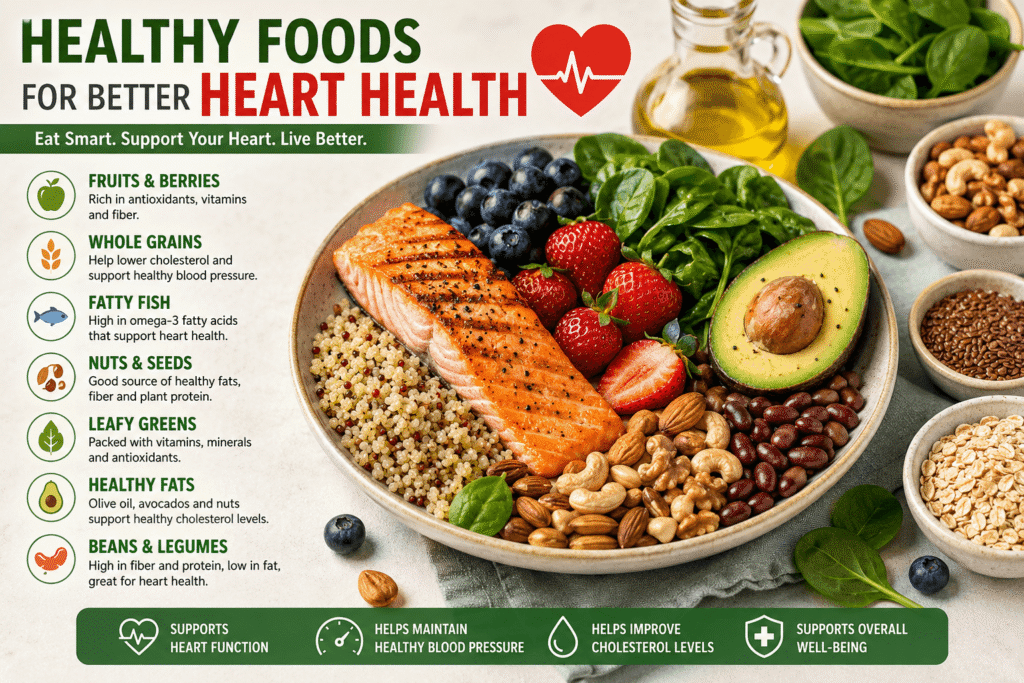
Your heart works around the clock, so the foods you eat regularly matter. Choosing healthy foods for heart health can be a simple way to build a more balanced eating pattern while supporting overall wellness.
A heart-friendly diet does not mean giving up everything you enjoy. Instead, it focuses on eating more vegetables, fruits, whole grains, beans, nuts, seeds, fish, and other nutritious foods while reducing excess sodium, added sugars, saturated fat, and highly processed foods.
Current cardiovascular nutrition guidance emphasizes an overall dietary pattern rather than one “magic” food.
The good news? Small changes can add up. Replacing refined grains with whole grains, choosing unsalted nuts instead of salty snacks, or adding vegetables to lunch can make everyday meals more heart-conscious.
Table of Contents
- Why Heart-Healthy Food Choices Matter
- Best Healthy Foods for Heart Health
- How These Foods Support Your Heart
- How to Build a Heart-Healthy Plate
- Foods to Limit for Better Heart Health
- Simple Heart-Healthy Eating Tips
- Common Mistakes to Avoid
- Practical Heart-Healthy Food Checklist
- CTA: Start Building Better Eating Habits
- Frequently Asked Questions
- Conclusion
Why Healthy Foods for Heart Health Matter
Heart health is influenced by many factors, including physical activity, smoking, sleep, stress, genetics, and nutrition.
Diet is particularly important because eating patterns can influence factors such as blood pressure, blood lipids, body weight, and overall cardiovascular risk.
The World Health Organization identifies unhealthy diets as an important risk factor for cardiovascular disease and recommends dietary patterns built around vegetables, fruits, whole grains, pulses, nuts, and other minimally processed foods.
A heart-friendly diet is therefore less about following a temporary diet and more about creating sustainable habits.
Best Healthy Foods for Heart Health
Leafy Greens: Healthy Foods for Heart Health
Spinach, kale, Swiss chard, arugula, and other leafy greens are nutrient-dense foods that can easily fit into a heart-conscious diet.
They provide fiber, vitamins, minerals, and plant compounds while adding volume to meals without many calories.
Try adding spinach to an omelet, kale to a salad, or mixed greens to a whole-grain sandwich.
2. Berries and Other Fruits
Blueberries, strawberries, raspberries, oranges, apples, and other fruits can provide fiber and beneficial plant compounds.
Instead of relying on sweetened desserts, try using fresh or frozen fruit as a naturally sweet addition to breakfast or snacks.
WHO recommends eating a variety of fruits and vegetables as part of a healthy diet.
3.Whole Grains for Heart Health
Whole grains such as oats, barley, brown rice, whole-grain bread, and whole-grain pasta contain more naturally occurring fiber than refined grains.
Fiber-rich foods can help make meals more satisfying and are an important part of healthy dietary patterns.
For breakfast, choose oatmeal topped with berries and unsalted nuts. At lunch, swap white bread for whole-grain bread.
4. Beans and Lentils for a Healthy Heart
Beans, lentils, chickpeas, and other pulses are affordable and versatile sources of plant protein and fiber.
They can be added to soups, salads, wraps, curries, grain bowls, and stews.
Replacing some meals based heavily on red or processed meat with plant-based protein sources can help create a more heart-friendly eating pattern. Current AHA guidance specifically encourages regular use of plant protein sources such as beans, peas, lentils, and nuts.
5. Fatty Fish and Omega-3 Foods for Heart Health
Salmon, sardines, trout, and other oily fish provide omega-3 fatty acids.
Fish can be a useful protein choice when included as part of an overall balanced diet.
Try baked salmon with roasted vegetables and brown rice for a simple dinner.
6.Nuts and Seeds for Heart Health
Almonds, walnuts, pistachios, chia seeds, flaxseeds, and pumpkin seeds can add healthy fats, protein, fiber, and other nutrients to meals.
Choose unsalted varieties when possible, especially if you are trying to reduce sodium.
A small handful of nuts can make a convenient snack, while chia or ground flaxseed can be added to oatmeal or yogurt.
7.Avocados and Healthy Fats for Heart Health
Avocados provide mostly unsaturated fats and can add a creamy texture to meals.
Use avocado instead of butter on whole-grain toast, add it to salads, or blend it into a homemade dressing.
The key is portion awareness because healthy fats are still calorie-dense.
8. Olive and Other Unsaturated Oils
Extra-virgin olive oil and other oils rich in unsaturated fats can be useful alternatives to butter and other fats high in saturated fat.
WHO guidance recommends replacing saturated fats with unsaturated fats where appropriate.
9. Low-Fat or Lower-Saturated-Fat Dairy Options
Plain yogurt, lower-fat milk, and other suitable dairy choices can provide protein and important nutrients.
However, nutrition needs differ between individuals. Compare labels and choose products that fit your overall eating pattern, particularly when considering saturated fat, added sugars, and sodium.
10. Vegetables of All Colors
Heart-friendly eating should not become boring.
Broccoli, carrots, peppers, tomatoes, cauliflower, sweet potatoes, peas, mushrooms, and cabbage can all contribute variety.
One simple strategy is to aim for different colors throughout the week rather than eating the same vegetable every day.
How These Foods Support Heart Health
Fiber Can Make Meals More Heart-Friendly
Fiber is found in foods such as whole grains, vegetables, fruits, beans, and lentils.
Rather than focusing on a single nutrient, build meals around naturally fiber-rich foods.
Healthy Fats Can Replace Less Helpful Fats
Not all fats are the same. A heart-conscious eating pattern generally favors unsaturated fats over saturated fats.
For example, you might replace butter with olive oil or choose nuts instead of a highly processed snack.
The AHA’s 2026 guidance emphasizes choosing unsaturated fats instead of saturated fats as part of an overall heart-healthy dietary pattern.
Reducing Sodium Can Support Healthy Blood Pressure
Excess sodium can contribute to raised blood pressure, which is an important cardiovascular risk factor.
A practical approach is to eat fewer highly processed foods and check labels for sodium.
WHO recommends adults consume less than 5 grams of salt per day, equivalent to less than 2,000 mg of sodium.
How to Build a Heart-Healthy Plate
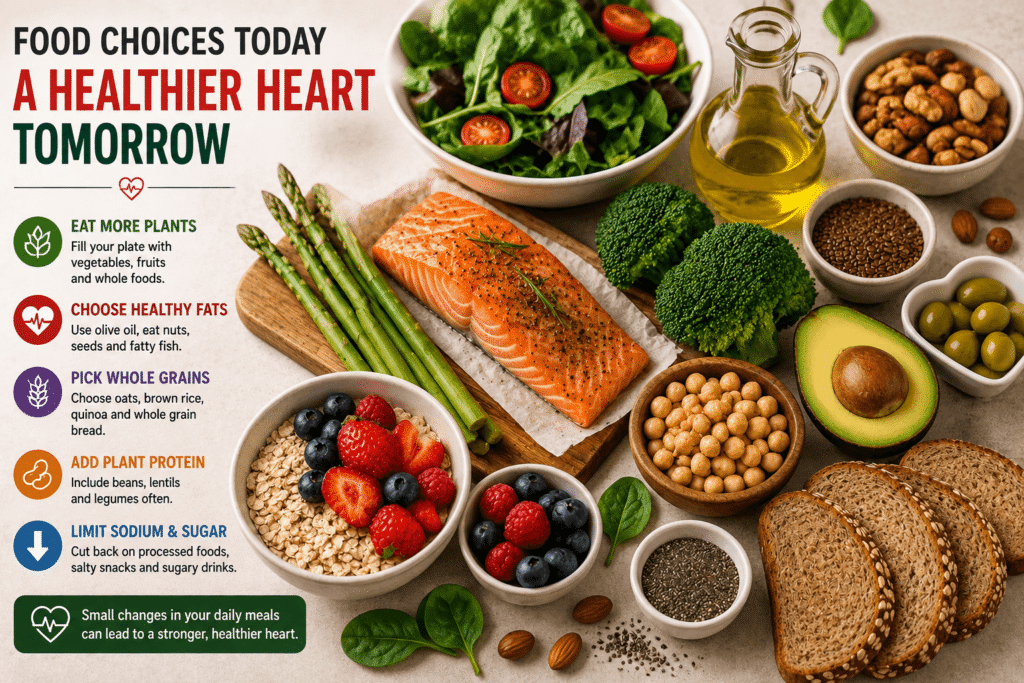
You do not need complicated meal plans.
Try this simple formula:
Step 1: Fill Half Your Plate With Vegetables and Fruit
Choose fresh, frozen, or suitable canned options. If using canned vegetables, look for lower-sodium choices when available.
Step 2: Add Whole Grains
Choose oatmeal, brown rice, barley, quinoa, or whole-grain bread.
Step 3: Add a Protein Source
Consider beans, lentils, fish, skinless poultry, tofu, nuts, seeds, or another suitable protein.
Step 4: Add a Source of Unsaturated Fat
A small amount of olive oil, avocado, nuts, or seeds can add flavor and healthy fats.
Health Canada similarly recommends meals built around vegetables and fruits, whole grains, and protein foods, with plant-based protein choices used more often.
Foods to Limit for Better Heart Health
A heart-friendly diet is not simply about adding nutritious foods. It is also about reducing foods that can make a healthy eating pattern harder to maintain.
Limit or eat less often:
- Processed meats such as bacon and sausages
- Foods high in sodium
- Deep-fried foods
- Highly processed snacks
- Sugary drinks
- Foods high in added sugars
- Large amounts of foods high in saturated fat
- Refined grains when whole-grain alternatives are available
Highly processed foods can contribute substantial amounts of sodium, added sugars, saturated fat, or other ingredients that may make a heart-healthy eating pattern more difficult.
This does not mean you can never enjoy your favorite foods. Frequency, portions, and the overall pattern matter.
Simple Heart-Healthy Eating Tips
Plan Before You Shop
Make a short grocery list based on meals you actually plan to prepare.
Include vegetables, fruit, whole grains, beans, fish or other lean proteins, and healthy fats.
Read Nutrition Labels
Compare products for sodium, saturated fat, added sugars, and fiber.
Health Canada recommends using food labels to help make healthier choices.
Cook More Often
Home cooking makes it easier to control ingredients and portion sizes.
Try roasting vegetables, baking fish, making bean soups, or preparing overnight oats.
Make One Swap at a Time
Instead of completely changing your diet overnight, choose one realistic improvement.
For example:
White bread → whole-grain bread
Butter → olive oil
Salty chips → unsalted nuts
Processed meat → beans or grilled fish
Sugary drink → water
Small swaps are easier to maintain.
Common Heart-Healthy Eating Mistakes to Avoid
Mistake 1: Looking for One “Superfood”
No single food can replace a balanced dietary pattern.
Heart health benefits come from the overall quality of what you eat regularly.
Mistake 2: Assuming All Packaged Foods Are Unhealthy
Some packaged foods can be nutritious and convenient.
Frozen vegetables, canned beans, plain yogurt, and low-sodium options can all have a place in a healthy diet.
Mistake 3: Ignoring Sodium
A meal can appear healthy while still containing significant sodium from sauces, dressings, processed meats, or packaged ingredients.
Mistake 4: Eliminating All Fat
Healthy fats can be part of a balanced diet. The goal is generally to choose healthier sources and appropriate portions rather than avoiding fat completely.
Mistake 5: Making Your Diet Too Complicated
The best eating pattern is one you can realistically maintain.
Practical Healthy Foods for Heart Health Checklist
Use this simple checklist when planning your weekly meals:
- Eat a variety of vegetables and fruits
- Choose whole grains regularly
- Include beans, lentils, nuts, or seeds
- Eat fish when appropriate for your dietary preferences
- Choose unsaturated fats more often
- Reduce highly processed foods
- Watch sodium levels
- Limit added sugars
- Choose water as your main beverage
- Read nutrition labels
- Cook at home more often
- Focus on sustainable habits rather than perfection
CTA: Start Building Better Heart-Healthy Habits
Healthy eating does not have to be complicated. Start with one meal, one food swap, or one new habit this week.
Follow Daily Nutrition Tips for practical nutrition guides, healthy recipes, meal ideas, and evidence-informed wellness tips that make healthy living easier.
If you are managing heart disease, high blood pressure, high cholesterol, diabetes, or taking medication, speak with a qualified healthcare professional or registered dietitian before making major dietary changes.
Frequently Asked Questions About Heart-Healthy Foods
1. What are the best healthy foods for heart health?
Some of the best choices include vegetables, fruits, whole grains, beans, lentils, nuts, seeds, fish, and foods rich in unsaturated fats. A varied dietary pattern is more important than relying on one particular food.
2. What foods should I eat for a healthy heart every day?
Aim to regularly include vegetables, fruits, whole grains, and nutritious protein sources. Choose unsaturated fats more often and keep highly processed foods, excess sodium, and added sugars limited.
3. Are oats good for heart health?
Oats are a nutritious whole-grain option and provide dietary fiber. They can be part of a balanced heart-healthy breakfast, especially when paired with fruit, nuts, or seeds instead of large amounts of added sugar.
4. Are nuts good for your heart?
Nuts can fit into a heart-healthy diet because they provide unsaturated fats, protein, fiber, and other nutrients. Choose unsalted varieties when possible and be mindful of portions.
5. Can healthy foods prevent heart disease?
A healthy dietary pattern can help support cardiovascular health and reduce risk factors, but it cannot guarantee prevention. Heart health also depends on physical activity, smoking status, genetics, sleep, medical conditions, and other lifestyle factors.
Conclusion
Choosing healthy foods for heart health is one practical way to build a better long-term eating pattern. You do not need a perfect diet or an expensive grocery list.
Start with simple choices: add more vegetables and fruit, choose whole grains, include beans and other nutritious proteins, enjoy fish and nuts, favor unsaturated fats, and reduce excess sodium, added sugars, and highly processed foods.
The most effective approach is consistency. Small food swaps repeated over weeks and months can become sustainable habits.
For more practical nutrition guidance, explore Daily Nutrition Tips and continue building meals that support your heart, energy, and overall well-being.