Introduction
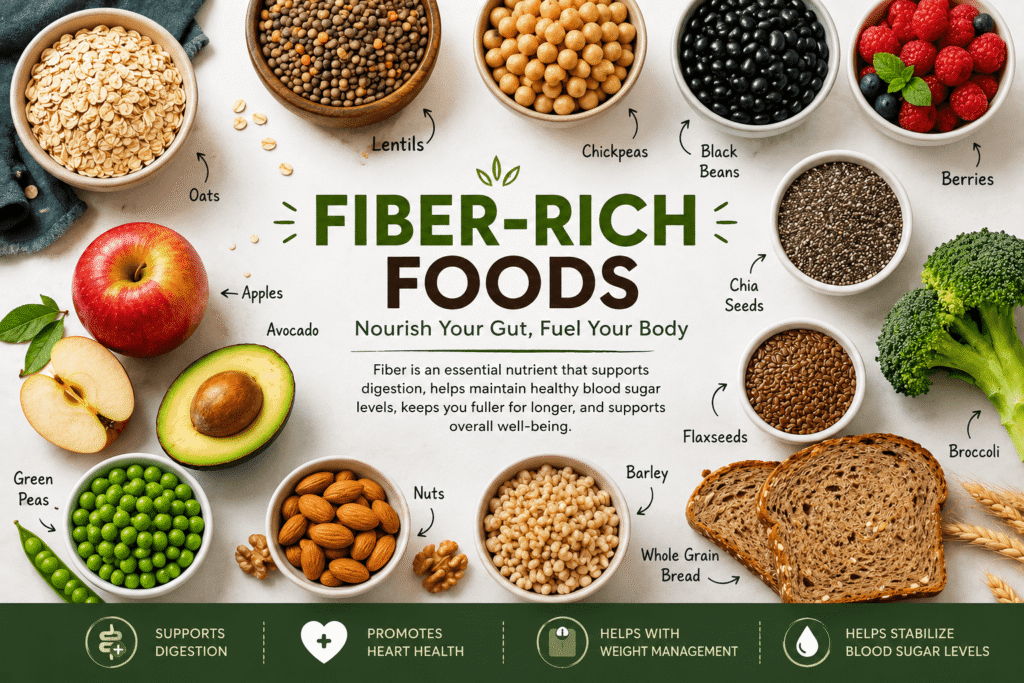
Fiber-rich foods are some of the simplest foods you can add to a healthy diet. From oats and lentils to berries, apples, vegetables, nuts, and seeds, fiber is naturally found in many plant foods that also provide vitamins, minerals, antioxidants, and other beneficial nutrients.
Yet many people still struggle to get enough fiber each day. In the U.S., the FDA lists 28 grams of dietary fiber per day as the Daily Value based on a 2,000-calorie diet.
The good news? Increasing your fiber intake does not require a complicated diet plan.
A few practical changes—such as choosing whole grains instead of refined grains, adding beans to lunch, eating fruit with the skin when appropriate, and including vegetables at dinner—can make a meaningful difference.
This guide explains the best fiber-rich foods, their potential benefits, how to increase fiber gradually, and common mistakes to avoid.
Table of Contents
- Why Fiber-Rich Foods Matter
- What Is Dietary Fiber?
- 15 Best Fiber-Rich Foods
- Benefits of Fiber-Rich Foods
- Soluble vs. Insoluble Fiber
- How to Add More Fiber to Your Diet
- Common Fiber Mistakes to Avoid
- Practical High-Fiber Food Checklist
- Internal and External Link Placement
- FAQ
- Conclusion
Why Fiber-Rich Foods Matter for Your Health
Fiber is different from many other carbohydrates because your body does not fully digest it.
Instead of being completely broken down and absorbed in the small intestine, different types of fiber move through the digestive system and can influence bowel regularity, fullness, blood cholesterol, and the gut environment.
Fiber-rich eating also fits well with current heart-health guidance. The American Heart Association’s 2026 dietary guidance emphasizes vegetables, fruits, whole grains, healthy protein sources, and minimally processed foods as part of a heart-healthy dietary pattern that is generally rich in fiber.
That makes fiber more than a “digestion nutrient.” It is part of an overall healthy eating pattern.
What Is Dietary Fiber?
Dietary fiber is a type of carbohydrate found primarily in plant foods.
Unlike digestible carbohydrates, fiber is not completely broken down by the digestive system.
There are two commonly discussed categories:
Soluble Fiber in Fiber-Rich Foods
Soluble fiber dissolves in water and can form a gel-like substance in the digestive tract.
Sources include:
- Oats
- Barley
- Beans
- Lentils
- Apples
- Citrus fruits
- Chia seeds
Oats, for example, contain beta-glucan, a soluble fiber that gives cooked oatmeal its characteristic thick texture.
Insoluble Fiber in High-Fiber Foods
Insoluble fiber does not dissolve in water. It contributes bulk to stool and supports normal movement through the digestive tract.
Good sources include:
- Whole-wheat foods
- Bran
- Vegetables
- Nuts
- Seeds
- Potato skins
- Many fruits and vegetables
Most high-fiber plant foods contain a mixture of different fibers, so you generally do not need to calculate exactly how much soluble or insoluble fiber you eat.
15 Best Fiber-Rich Foods to Add to Your Diet
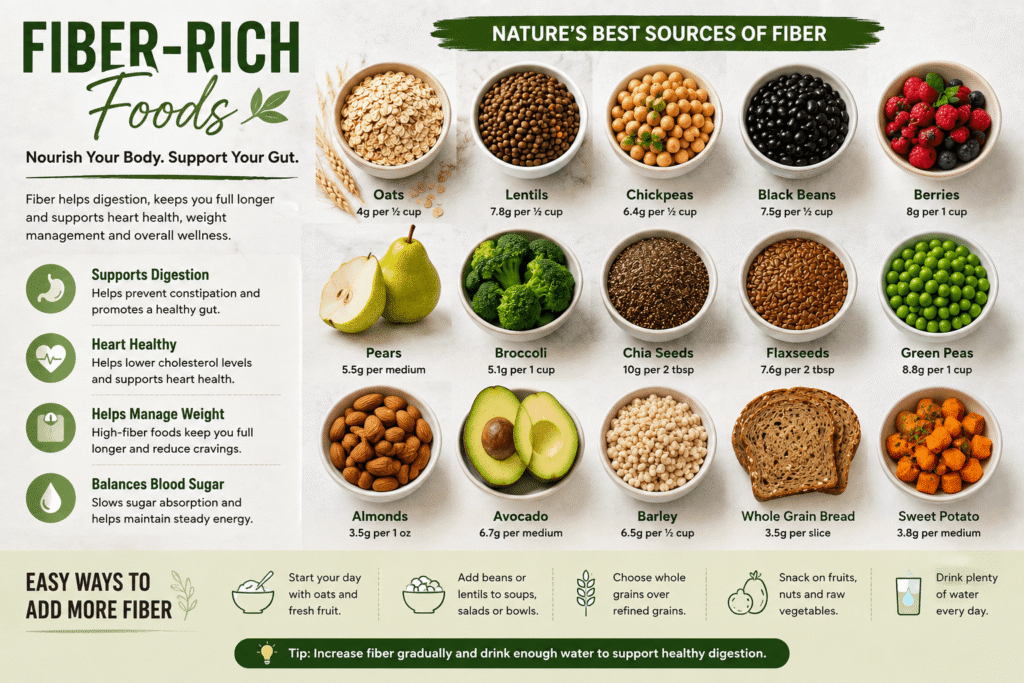
There is no single “perfect” source of fiber. Variety is the better strategy.
1. Lentils
Lentils are an excellent everyday source of fiber and plant protein.
Try adding cooked lentils to soups, salads, curries, grain bowls, or homemade vegetable dishes.
They are especially useful for people looking for affordable, filling foods.
2. Chickpeas
Chickpeas are another versatile high-fiber food.
Use them in hummus, salads, roasted snacks, soups, or Mediterranean-inspired bowls.
3. Black Beans and Other Beans
Black beans, kidney beans, navy beans, cannellini beans, and pinto beans can add substantial fiber to meals.
They also provide plant protein and other nutrients.
A simple strategy is to replace part of the meat in tacos, chilli, pasta sauces, or grain bowls with beans.
4. Oats
Oatmeal is one of the easiest high-fiber breakfast options.
Top it with:
- Berries
- Chia seeds
- Ground flaxseed
- Apples
- Walnuts
- Plain yogurt
This creates a breakfast containing several different sources of fiber.
5. Chia Seeds
Chia seeds are small but fiber-dense.
Add them to oatmeal, yogurt, smoothies, overnight oats, or chia pudding.
Because they absorb liquid, drink enough fluids and increase portions gradually if you are not accustomed to eating much fiber.
6. Flaxseeds
Ground flaxseed can be added to smoothies, oatmeal, whole-grain cereal, or homemade energy bites.
Grinding flaxseed makes it easier to incorporate into everyday meals.
7. Raspberries
Raspberries are a convenient fiber-rich fruit and can add natural sweetness to breakfast or snacks.
Try combining them with Greek yogurt and oats for a simple high-fiber snack.
8. Pears
Pears are another useful fruit choice.
When appropriate, eating the fruit with its skin provides more fiber than eating only the flesh.
9. Apples
Apples make an easy portable snack.
Pair an apple with nuts or nut butter for a combination of fiber, healthy fats, and protein.
10. Avocado
Avocado provides fiber along with unsaturated fats.
Add it to whole-grain toast, salads, wraps, grain bowls, or sandwiches.
11. Broccoli
Broccoli is a practical vegetable for lunch and dinner.
Steam, roast, stir-fry, or add it to soups and pasta dishes.
12. Brussels Sprouts
Brussels sprouts provide fiber along with vitamins and other plant compounds.
Roasting them with herbs and a small amount of olive oil can turn them into a simple side dish.
13. Green Peas
Green peas can easily be added to soups, rice dishes, pasta, salads, and vegetable bowls.
Frozen peas are especially convenient because they require little preparation.
14. Barley
Barley is a whole grain that works well in soups, grain bowls, and salads.
Choosing whole grains more often can increase fiber while also making meals more satisfying.
The American Heart Association notes that refining grains removes the bran and germ and can remove much of the grain’s natural fiber.
15. Whole-Grain Bread and Pasta
Not all bread or pasta products contain the same amount of fiber.
Check the Nutrition Facts label and look for whole-grain ingredients and a higher fiber value.
For packaged foods in the U.S., the FDA lists 5% Daily Value or less as low and 20% or more as high for a nutrient on the Nutrition Facts label.
Benefits of Fiber-Rich Foods for Better Health
Fiber-Rich Foods for Better Digestive Health
One of the most familiar benefits of fiber is its role in normal bowel function.
Fiber can increase stool bulk and help support regular bowel movements. Research has found benefits from certain fiber interventions for constipation, although results can vary depending on the type of fiber and the individual.
For that reason, “more fiber” is not always the complete answer. The type, amount, fluid intake, and overall diet matter too.
Greater Fullness
High-fiber foods can help meals feel more satisfying.
For example, oatmeal with berries and chia seeds is likely to be more filling than a breakfast made mostly from refined carbohydrates.
This can make fiber-rich foods useful when building a balanced eating pattern.
Heart Health Support
Fiber-rich foods are often part of heart-healthy dietary patterns.
The American Heart Association recommends emphasizing vegetables, fruits, whole grains, and minimally processed foods.
Vegetables are also recognized by MyPlate as important sources of dietary fiber and other essential nutrients.
Supporting a Healthy Eating Pattern
Another advantage of fiber is that it naturally encourages people to eat more plant foods.
Instead of focusing only on one nutrient, build meals around:
Vegetables + whole grains + beans or other protein + fruit + healthy fats.
That approach is more sustainable than relying on a single “superfood.”
Potential Long-Term Health Benefits
Higher dietary fiber intake has also been associated with several positive health outcomes.
For example, a systematic review and meta-analysis found an association between higher soluble and insoluble fiber intake and lower colorectal cancer risk, although observational evidence cannot prove that fiber alone prevents cancer.
How to Add More Fiber-Rich Foods to Your Diet
Increasing fiber works best when you make small changes.
Step 1: Start With Breakfast
Choose oatmeal, whole-grain cereal, berries, pears, chia seeds, or ground flaxseed.
Step 2: Add Beans Several Times a Week
Add chickpeas or beans to salads, soups, wraps, chilli, and grain bowls.
Step 3: Replace Refined Grains
Try:
- Brown rice instead of white rice
- Whole-wheat pasta instead of regular pasta
- Whole-grain bread instead of refined white bread
- Oats instead of highly refined breakfast cereals
Step 4: Make Vegetables the Default Side
Instead of treating vegetables as an optional extra, include one or two portions with lunch and dinner.
Step 5: Choose Whole Fruit
Choose whole apples, pears, berries, oranges, or other fruits more often instead of relying mainly on juices.
Step 6: Increase Fiber Gradually
A sudden increase can cause gas, bloating, or abdominal discomfort.
Increase portions progressively and pay attention to how your body responds.
Step 7: Stay Hydrated : fiber-rich foods
Fiber and fluids work together in normal digestive function.
If you significantly increase fiber, make sure your overall fluid intake is appropriate for your individual needs.
Common Mistakes to Avoid
Increasing Fiber Too Quickly
Jumping from a low-fiber diet to very large portions of beans, bran, seeds, and vegetables overnight can cause digestive discomfort.
Increase gradually.
Relying Only on Fiber Supplements
Whole foods provide much more than fiber alone.
Fruits, vegetables, beans, whole grains, nuts, and seeds also provide vitamins, minerals, and other beneficial plant compounds.
Forgetting Portion Balance
A food can be high in fiber and still need to fit into your overall eating pattern.
Build balanced meals rather than focusing on fiber numbers alone.
Choosing Highly Processed “High-Fiber” Foods
A package saying “high fiber” does not automatically make a food the best choice.
Read the ingredient list and Nutrition Facts label.
Ignoring Individual Digestive Needs
Some people with specific gastrointestinal conditions may need individualized dietary advice.
If increasing fiber consistently causes significant pain, persistent bloating, or other digestive symptoms, discuss your diet with a qualified healthcare professional.
Practical Fiber-Rich Foods Checklist
Use this simple checklist when planning your weekly meals:
- Eat fruit daily.
- Include vegetables with main meals.
- Add beans, lentils, or chickpeas regularly.
- Choose whole grains more often.
- Try oats for breakfast.
- Add chia or ground flaxseed to suitable meals.
- Snack on fruit, nuts, or seeds.
- Read the fiber value on food labels.
- Increase fiber gradually.
- Maintain appropriate fluid intake.
Take the Next Step Toward Better Nutrition
Adding more fiber-rich foods does not have to mean changing your entire diet.
Start with one simple upgrade today: add berries to breakfast, choose whole-grain bread, mix lentils into dinner, or include an extra serving of vegetables.
For personalized nutrition guidance, consider speaking with a registered dietitian or qualified healthcare professional who can help you create an eating pattern that fits your goals, preferences, and individual needs.
Ready to build healthier daily habits? Explore more practical nutrition guides at Daily Nutrition Tips and make your next meal a healthier one.
FAQ: Fiber-Rich Foods
1. What are the best fiber-rich foods?
Some of the best fiber-rich foods include lentils, beans, chickpeas, oats, chia seeds, flaxseeds, berries, pears, apples, vegetables, barley, and whole-grain foods.
2. How much fiber should adults eat each day?
The FDA Daily Value for dietary fiber is 28 grams per day based on a 2,000-calorie diet. Individual needs can vary according to calorie intake and other factors.
3. Can fiber-rich foods help with constipation?
Fiber can support bowel regularity, and research suggests that some types of fiber can improve stool frequency and consistency. However, individual responses vary, so increasing fiber gradually is generally a sensible approach.
4. Are fruits good sources of fiber?
Yes. Whole fruits such as raspberries, pears, apples, and oranges can contribute fiber to the diet. Eating whole fruit generally provides more fiber than drinking fruit juice.
5. Should I increase fiber quickly?
It is usually better to increase fiber gradually. A sudden increase may cause gas or bloating, especially if your current diet is low in fiber. Drinking appropriate amounts of fluid and spreading fiber-rich foods throughout the day may improve tolerance.
Conclusion: fiber-rich foods
Fiber-rich foods are an easy and practical foundation for a healthier eating pattern. Beans, lentils, oats, whole grains, fruits, vegetables, nuts, and seeds can help you increase dietary fiber while adding valuable nutrients and variety to your meals.
The goal is not to obsess over a single number. Instead, focus on building meals around minimally processed plant foods and increasing fiber gradually.
Start small, stay consistent, and choose variety. Over time, these simple changes can make a healthy diet easier to maintain.
For more practical nutrition guidance, continue exploring Daily Nutrition Tips and discover simple ways to make healthier choices every day.