Introduction
Adding high protein foods to your everyday meals can make healthy eating easier, more satisfying and more versatile. Protein helps your body build and maintain tissues, supports muscles and plays an important role in many normal body functions.
But getting more protein does not mean eating steak or drinking protein shakes at every meal. There are plenty of nutritious options, including eggs, Greek yogurt, fish, chicken, beans, lentils, tofu, nuts and seeds.
The current U.S. Dietary Guidelines emphasize whole, nutrient-dense foods, including a variety of protein foods, vegetables, fruits, whole grains and healthy fats.
For most people, the goal should not be to eat as much protein as possible. Instead, it is about choosing quality protein sources and fitting them into a balanced eating pattern.
This guide explores 18 high protein foods that can work for different diets, budgets, cultures and lifestyles across the USA, Canada, Europe and the UK.
Table of Contents
- Why High Protein Foods Matter
- 18 High Protein Foods for Everyday Health
- Benefits of Protein-Rich Foods
- How Much Protein Do You Need?
- How to Add More Protein to Your Diet
- Common High-Protein Eating Mistakes
- Practical High Protein Food Checklist
- Internal and External Link Suggestions
- CTA
- Frequently Asked Questions
- Conclusion
Why High Protein Foods Matter
Protein is one of the three major macronutrients, alongside carbohydrates and fats.
Your body uses protein to build and maintain muscles, bones, skin and other tissues. It also contributes to enzymes, hormones and other important biological processes.
Protein can also make meals more satisfying. Because protein takes longer to digest than some other foods, including a protein source in a meal or snack may help you feel fuller between meals. Recent clinical nutrition guidance also highlights protein’s role in muscle maintenance and satiety.
However, protein works best as part of an overall balanced diet.
A meal containing protein, vegetables or fruit, whole grains and healthy fats is generally more nutritionally complete than a meal focused on protein alone.
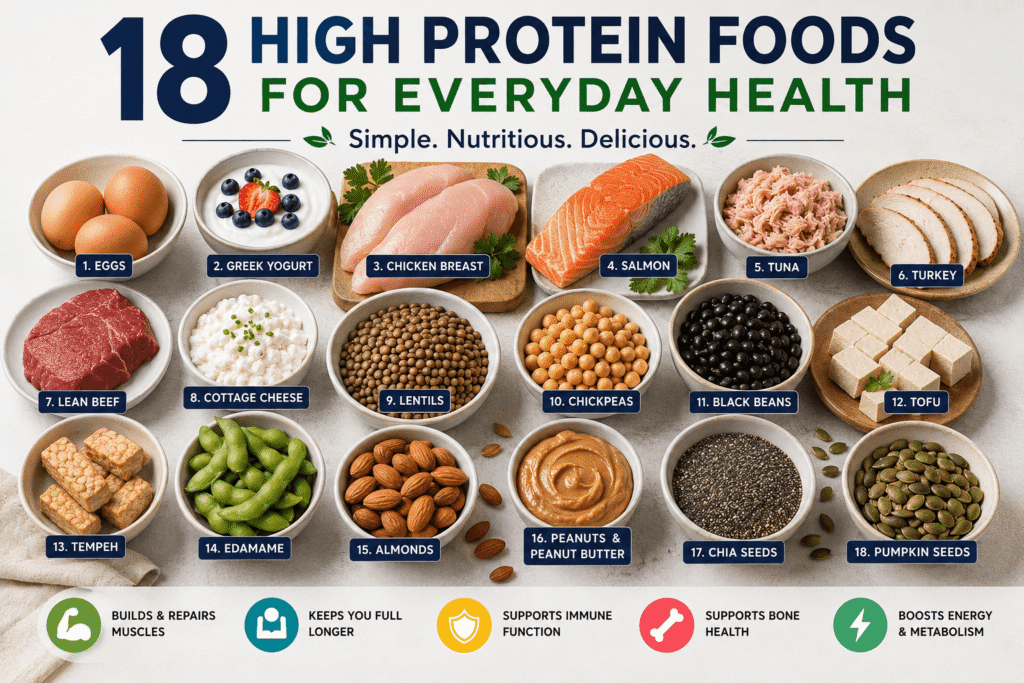
18 High Protein Foods for Everyday Health
Not every protein food needs to be expensive, complicated or difficult to prepare.
Here are 18 practical options you can rotate throughout the week.
1. Eggs and Other High Protein Foods for Breakfast
Eggs are one of the easiest high protein foods to include at breakfast, lunch or dinner.
They are versatile, affordable and easy to prepare. Enjoy boiled eggs with whole-grain toast, add scrambled eggs to vegetables, or use eggs in a homemade breakfast wrap.
Whole eggs also provide nutrients such as choline, vitamin B12 and selenium.
2. Greek Yogurt as a Protein-Rich Food
Plain Greek yogurt is a convenient protein-rich food that works well for breakfast and snacks.
Choose unsweetened varieties and add berries, oats, nuts or seeds for extra fiber and nutrients.
Greek yogurt can also replace sour cream in some recipes.
3. Chicken and Turkey: Lean Protein Foods
Skinless chicken breast is a popular lean protein source and can be used in countless meals.
Try grilled chicken with vegetables, sliced chicken in a whole-grain wrap or shredded chicken in a salad.
For a healthier meal, focus on baking, grilling, roasting or air-frying instead of deep-frying.
4. Salmon and Tuna for Protein and Omega-3s
Salmon provides both protein and omega-3 fatty acids.
It can be baked with herbs and lemon, served with roasted vegetables or added to a grain bowl.
Choosing fish regularly can add variety to your protein intake.
5. Lentils, Chickpeas, and Beans for Plant-Based Protein
Canned tuna is convenient, affordable and easy to store.
Use tuna in sandwiches, salads or whole-grain wraps. Look for options that fit your dietary needs and consider lower-sodium varieties when available.
6. Turkey
Turkey breast is another lean protein option.
You can use roasted turkey in sandwiches, salads, wraps or meal-prep bowls.
When buying processed turkey products, compare labels because sodium levels can vary significantly.
7. Lean Beef
Lean beef can provide protein as well as nutrients such as iron, zinc and vitamin B12.
Choose leaner cuts and keep portions appropriate for your overall diet.
You can pair lean beef with vegetables and whole grains rather than making meat the entire focus of the meal.
8. Cottage Cheese
Cottage cheese is a convenient protein-rich food that requires little preparation.
Serve it with berries for breakfast, add it to a savory bowl with vegetables, or use it as a creamy ingredient in recipes.
If sodium is a concern, look for reduced-sodium options.
9. Lentils, Chickpeas, and Beans for Plant-Based Protein
Lentils are among the most useful plant-based protein foods.
They also provide fiber, making them particularly valuable for people who want protein and plant nutrients in the same food.
Add lentils to soups, curries, salads or grain bowls.
10. Chickpeas
Chickpeas, also called garbanzo beans, are affordable and highly versatile.
Use them to make hummus, add them to salads, roast them for a crunchy snack or include them in curries.
They can help make plant-based meals more filling.
11. Black Beans
Black beans are another affordable source of plant protein and fiber.
They work well in tacos, burrito bowls, soups, salads and chili.
For busy households, canned beans can be especially convenient. Choose lower-sodium versions when possible.
12. Tofu, Tempeh, and Edamame for Plant Protein
Tofu is a versatile soy-based protein that can fit vegetarian and vegan eating patterns.
It absorbs flavors from sauces and spices, making it useful in stir-fries, curries and noodle dishes.
For a simple meal, combine baked tofu with vegetables and brown rice.
13. Tempeh
Tempeh is another soy-based protein with a firm texture and nutty flavor.
Slice it into sandwiches, crumble it into stir-fries or bake it with herbs and spices.
It can be a useful alternative when you want variety beyond beans and lentils.
14. Edamame
Edamame are young soybeans and an easy plant-based protein option.
Serve them as a snack, add them to salads or mix them into rice and noodle bowls.
They can be particularly convenient when purchased frozen.
15. Almonds
Almonds provide protein along with unsaturated fats, fiber and other nutrients.
A small portion makes a convenient snack.
You can also sprinkle chopped almonds over oatmeal, yogurt or salads.
Because nuts are energy-dense, portion size still matters.
16. Peanuts and Peanut Butter
Peanuts and natural peanut butter can add protein and healthy fats to meals.
Spread peanut butter on whole-grain toast, add it to oatmeal or combine it with fruit.
Choose products with little or no added sugar and avoid assuming that more is always better.
17. Chia Seeds
Chia seeds provide plant protein along with fiber and healthy fats.
Add them to overnight oats, yogurt, smoothies or homemade chia pudding.
They are small, but they can make an easy nutritional addition to breakfast.
18. Pumpkin Seeds
Pumpkin seeds are a convenient way to add plant protein and minerals to meals.
Sprinkle them over salads, soups, yogurt or oatmeal.
For a simple snack, combine unsalted pumpkin seeds with almonds and dried fruit.
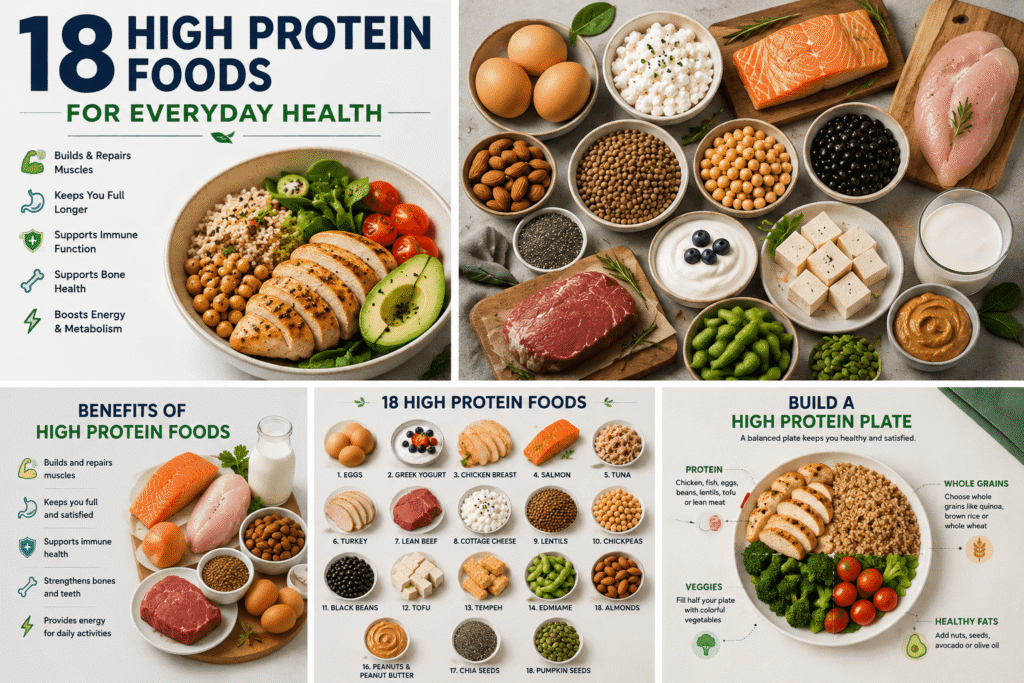
Benefits of High Protein Foods
Eating enough protein as part of a balanced diet can offer several advantages.
Protein Helps Maintain Muscle
Muscle tissue is constantly being broken down and rebuilt. Protein provides amino acids needed for maintenance and repair.
This becomes especially important as people age because maintaining muscle strength supports everyday movement and independence.
Protein Can Increase Meal Satisfaction
Protein-rich meals can help you feel satisfied after eating.
That can make it easier to manage hunger between meals, especially when protein is combined with fiber-rich foods such as vegetables, fruits, beans and whole grains.
Protein Supports Active Lifestyles
People who exercise regularly need adequate nutrition to support training and recovery.
However, more protein is not automatically better. Individual needs depend on factors such as body size, age, activity level and health status.
Plant Protein Adds Fiber and Variety
Beans, lentils, chickpeas, soy foods, nuts and seeds can provide protein alongside other nutrients.
The current Dietary Guidelines encourage a variety of protein foods and emphasize nutrient-dense whole foods.
How Much Protein Do You Need?
Protein needs vary from person to person.
Factors such as age, body size, physical activity, pregnancy, health conditions and goals can affect individual requirements.
Current U.S. guidance also recognizes a broad range of protein foods, including meat, poultry, seafood, beans, peas, eggs, soy products, nuts, nut butters and seeds.
Instead of automatically following a high-protein diet, focus on including a reasonable protein source at meals and snacks.
If you have kidney disease, another medical condition, or specific dietary requirements, ask a healthcare professional or registered dietitian about your individual protein needs.
How to Add More Protein to Your Diet
You do not need to completely change your diet.
Try these simple swaps:
Breakfast
- Add eggs to whole-grain toast.
- Choose Greek yogurt with berries.
- Add chia seeds to oatmeal.
- Blend plain yogurt into a smoothie.
Lunch
- Add chicken or tuna to a salad.
- Make a chickpea or lentil bowl.
- Add tofu to a vegetable stir-fry.
- Use hummus in a whole-grain wrap.
Dinner
- Serve salmon with vegetables.
- Add beans to tacos or chili.
- Choose lean chicken with brown rice.
- Add tempeh to a vegetable stir-fry.
Snacks
- Greek yogurt and berries
- Cottage cheese and fruit
- Unsalted almonds
- Edamame
- Apple with peanut butter
Common High Protein Eating Mistakes
Choosing Processed Foods Simply Because They Contain Protein
A product labeled “high protein” is not automatically healthy.
Some protein bars, shakes and packaged foods can contain significant amounts of added sugar, sodium or saturated fat.
Read the nutrition label rather than judging a food by its protein content alone.
Ignoring Fiber
Protein is important, but so are vegetables, fruits, whole grains and legumes.
Combining protein with fiber-rich foods creates a more balanced meal. Eating Too Much Processed Meat
Bacon, sausages and other processed meats may provide protein, but they can also contain high levels of sodium and saturated fat.
Choose fresh or minimally processed protein sources more often.
Forgetting Plant-Based Protein
You do not need to eat meat at every meal to get protein.
Beans, lentils, soy foods, nuts and seeds can all contribute to protein intake.
Practical High Protein Food Checklist
Use this checklist when planning your weekly meals:
- Include a protein source at breakfast.
- Add beans or lentils to at least a few meals.
- Include fish when it fits your diet.
- Keep Greek yogurt available for quick snacks.
- Keep unsalted nuts or seeds on hand.
- Try tofu, tempeh or edamame for plant-based meals.
- Choose leaner cuts of meat more often.
- Combine protein with vegetables or fruit.
- Choose whole grains alongside protein-rich foods.
- Compare sodium and added sugar on packaged foods.
- Plan protein-rich snacks for busy days.
- Focus on variety instead of relying on one food.
CTA: Make Protein Part of Your Everyday Meals
Eating better does not have to mean following a complicated diet.
Start with one simple change today: add Greek yogurt to breakfast, beans to lunch, salmon to dinner or a handful of unsalted nuts to your snack routine.
For more practical nutrition ideas, explore Daily Nutrition Tips for healthy recipes, high-protein meal ideas, nutrition guides and everyday wellness tips.
If you have a medical condition or specific nutritional needs, consult a qualified healthcare professional or registered dietitian before making major dietary changes.
Frequently Asked Questions
1. What are the best high protein foods?
Some of the best high protein foods include eggs, Greek yogurt, chicken, salmon, tuna, lean beef, cottage cheese, lentils, chickpeas, tofu, tempeh, edamame, nuts and seeds.
2. What high protein foods are good for everyday meals?
Eggs, Greek yogurt, beans, lentils, chicken, fish, tofu and nuts are practical options for everyday meals. Choose different protein sources throughout the week for variety.
3. What are the best plant-based high protein foods?
Lentils, chickpeas, black beans, tofu, tempeh, edamame, peanuts, almonds, chia seeds and pumpkin seeds are useful plant-based protein foods.
4. Can high protein foods help with weight management?
Protein can increase meal satisfaction and help support muscle maintenance. However, weight management depends on overall calorie intake, food quality, physical activity, sleep and other factors—not protein alone.
5. How can I eat more protein without using protein powder?
You can increase protein through regular foods such as eggs, Greek yogurt, cottage cheese, fish, chicken, beans, lentils, tofu, tempeh, nuts and seeds. Protein powder is not required for everyone.
Conclusion
Adding high protein foods to your everyday meals can be a practical way to support muscle maintenance, meal satisfaction and overall nutrition.
The best approach is variety. Rotate animal and plant protein sources such as eggs, Greek yogurt, salmon, chicken, lentils, beans, tofu, edamame, nuts and seeds.
Most importantly, do not focus on protein alone. Build balanced meals that also include vegetables, fruits, whole grains and healthy fats.
Whether you are preparing breakfast before work in the UK, packing lunch for a busy day in Canada, planning family meals in the USA or creating a simple dinner in Europe, there are plenty of easy ways to make protein-rich foods part of your routine.
Start small, choose foods you enjoy and focus on consistency.
Daily Nutrition Tips can help you discover more practical ways to eat well, plan balanced meals and build healthier everyday habits.