Introduction
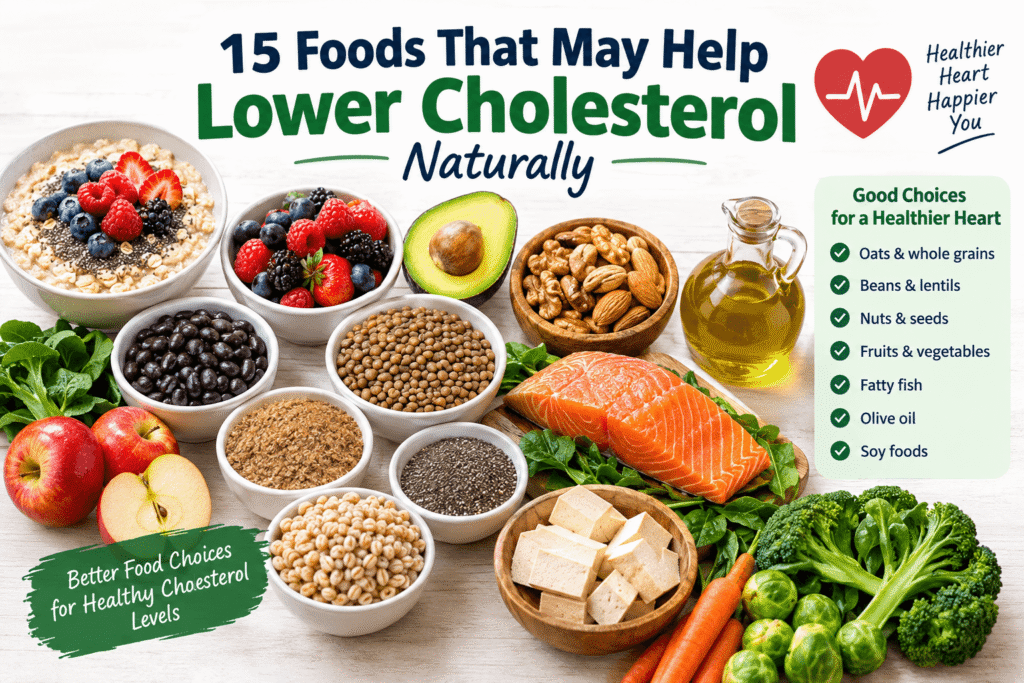
High cholesterol is a common health concern, but everyday food choices can make a difference. **Foods that may help lower cholesterol naturally** include oats, beans, lentils, nuts, fruits, vegetables, fatty fish, and other heart-healthy choices that provide soluble fiber, healthy fats, and important nutrients. Adding these foods to a balanced diet may support healthier cholesterol levels and overall heart health
Choosing a variety of foods that may help lower cholesterol naturally can make healthy eating easier and more enjoyable. Focus on regular, balanced meals rather than relying on a single food or supplement.
Table of Contents
- Why Cholesterol Matters
- How Food Can Affect Cholesterol
- 15 Foods That May Help Lower Cholesterol Naturally
- How to Build a Cholesterol-Friendly Diet
- Common Mistakes to Avoid
- Practical Daily Checklist
- CTA
- Frequently Asked Questions
- Conclusion
Why Cholesterol-Lowering Foods Matter
Cholesterol is a waxy substance that your body needs for important functions, including making hormones and helping digest fats. However, having too much LDL cholesterol in the blood can increase cardiovascular risk.
Diet is only one part of the picture. Genetics, physical activity, body weight, smoking, certain health conditions, and medications can also influence cholesterol levels.
That is why a healthy eating pattern should not be viewed as a replacement for medical care.
If you have been diagnosed with high cholesterol, continue following your healthcare professional’s recommendations.
How Cholesterol-Lowering Foods Can Help
Certain foods can support healthier cholesterol levels in several ways.
Soluble fiber can form a gel-like substance in the digestive tract that reduces cholesterol absorption. Oats, beans, lentils, fruits, and some vegetables are useful sources.
Unsaturated fats can replace foods higher in saturated fat. Examples include olive oil, avocados, nuts, and seeds.
Plant sterols and stanols can also reduce cholesterol absorption and are found naturally in small amounts in plant foods, as well as in some fortified products.
The bigger goal is therefore not to depend on one “magic” food. Instead, build meals around a variety of minimally processed, nutrient-rich foods.
15 Foods That May Help Lower Cholesterol Naturally
1. Oatmeal
Oatmeal is one of the simplest foods to add to a cholesterol-friendly breakfast.
Oats contain soluble fiber, including beta-glucan, which can help support lower LDL cholesterol when consumed regularly as part of a healthy diet.
Try starting your day with plain oatmeal topped with berries, sliced apple, walnuts, or ground flaxseed.
2. Beans
Black beans, kidney beans, chickpeas, and other legumes provide fiber and plant-based protein.
Replacing some higher-saturated-fat meats with beans can make meals more heart-friendly while also increasing fiber intake.
Add beans to soups, salads, chili, wraps, or grain bowls.
3. Lentils
Lentils are inexpensive, versatile, and naturally rich in fiber and plant protein.
They work well in soups, curries, salads, and vegetarian main dishes. Swapping lentils for some processed or fatty meats is an easy way to improve the nutritional quality of a meal.
4. Almonds
Almonds provide unsaturated fats, fiber, protein, vitamins, and minerals.
A small handful can make a convenient snack. Choose unsalted or lightly salted almonds when possible, and avoid varieties coated with added sugar.
Nuts are best enjoyed in sensible portions because they are energy-dense.
5. Walnuts
Walnuts are another useful addition to a heart-conscious eating pattern.
They contain polyunsaturated fats, including plant-based omega-3 fatty acids. Sprinkle chopped walnuts over oatmeal or yogurt, or add them to salads.
The American Heart Association lists nuts among foods that can support heart-healthy eating.
6. Avocados
Avocados are naturally rich in monounsaturated fats and also provide fiber.
Instead of spreading butter on toast, try mashed avocado. You can also add avocado to salads, grain bowls, sandwiches, or homemade dips.
This simple substitution can help replace some sources of saturated fat with unsaturated fat.
7. Apples
Apples are an easy source of soluble fiber and make a convenient snack.
Keeping the skin on provides additional fiber. Pair an apple with a small serving of nuts or natural nut butter for a more satisfying snack.
8. Berries
Strawberries, blueberries, raspberries, and blackberries provide fiber and a variety of plant compounds.
Fresh or frozen berries can be added to oatmeal, plain yogurt, smoothies, or whole-grain cereal.
Choose whole berries more often than sugary fruit drinks.
9. Barley
Barley is another whole grain containing soluble fiber.
Use cooked barley in soups, salads, or grain bowls instead of refined grains. Its chewy texture can make meals more filling while increasing whole-grain intake.
Whole grains are an important part of current heart-healthy dietary guidance.
10. Fatty Fish
Salmon, sardines, trout, herring, and mackerel provide omega-3 fatty acids.
Omega-3 fats are particularly associated with heart health and can be a useful replacement for fatty meats in a balanced diet. The American Heart Association recommends fish as part of a heart-healthy eating pattern.
Try baked salmon with vegetables and a whole grain for an easy dinner.
11. Olive Oil
Extra-virgin olive oil is a source of monounsaturated fat and can be used instead of butter or other fats higher in saturated fat.
Drizzle a small amount over vegetables, use it in homemade salad dressing, or use it for appropriate cooking.
Remember that healthy oils still contain calories, so portion size matters.
12. Chia Seeds
Chia seeds provide fiber, plant-based omega-3 fatty acids, and other nutrients.
Add a spoonful to oatmeal, yogurt, smoothies, or overnight oats. Because chia absorbs liquid, it is also useful for making simple chia pudding.
Increasing fiber gradually and drinking enough fluids can make the transition more comfortable.
13. Ground Flaxseed
Ground flaxseed is another convenient source of fiber and plant-based omega-3 fats.
Use ground rather than whole flaxseed when you want easier access to its nutrients. Add it to oatmeal, smoothies, whole-grain muffins, or yogurt.
A small daily addition can be an easy nutrition upgrade.
14. Soy Foods
Tofu, tempeh, edamame, and unsweetened soy milk provide plant-based protein.
Using soy foods in place of some fatty animal proteins can help create a diet lower in saturated fat.
For example, try tofu in a vegetable stir-fry or edamame in a grain bowl.
15. Vegetables
Vegetables such as broccoli, carrots, eggplant, leafy greens, and Brussels sprouts can contribute fiber and a wide range of nutrients.
They may not be marketed as “cholesterol-lowering foods,” but they are an essential part of the overall dietary pattern that supports cardiovascular health.
Aim for variety rather than relying on just one vegetable.
The CDC recommends fruits, vegetables, whole grains, legumes, nuts, and seeds as good sources of fiber.
Benefits of Cholesterol-Lowering Foods
A diet built around these foods may offer benefits beyond cholesterol management.
Soluble Fiber Foods That May Help Lower Cholesterol
Beans, oats, fruits, vegetables, and whole grains can help increase fiber intake. Soluble fiber is particularly relevant to LDL cholesterol.
Healthy Fats That May Help Lower Cholesterol
Replacing butter, fatty meats, and other foods high in saturated fat with sources of unsaturated fat can improve the overall quality of your diet.
Plant-Based Foods That May Help Lower Cholesterol
Beans, lentils, tofu, and other plant proteins can make it easier to reduce reliance on higher-saturated-fat animal foods.
Better Overall Heart Health
The latest American Heart Association dietary guidance emphasizes vegetables, fruits, whole grains, healthy protein sources, unsaturated fats, minimally processed foods, and reduced saturated fat as components of a heart-healthy pattern.
How to Build a Heart-Healthy, Cholesterol-Friendly Diet
You do not need to completely redesign your kitchen overnight.
Step 1: Upgrade Breakfast
Replace sugary pastries or heavily processed breakfast foods with oatmeal, berries, nuts, or whole-grain toast.
Step 2: Add Beans or Lentils
Try adding half a cup of beans or lentils to lunch or dinner several times a week.
Step 3: Replace Saturated Fats
Use olive oil instead of butter when appropriate. Choose leaner proteins and more plant-based options.
Step 4: Make Vegetables a Priority
Fill a substantial portion of your plate with vegetables.
Step 5: Choose Whole Grains
Swap refined grains for oats, barley, brown rice, or other whole-grain options.
Step 6: Include Fish
When suitable for your dietary preferences, include fish such as salmon or trout as an alternative to fatty meats.
Common Mistakes to Avoid
Relying on One Food
Eating oatmeal every morning does not automatically correct an unhealthy diet. Cholesterol management works best as part of a broader eating pattern.
Ignoring Saturated Fat
Adding healthy foods while continuing to consume large amounts of butter, fatty meats, processed meats, and high-fat dairy may limit progress.
Eating Too Many “Healthy” Calories
Nuts, seeds, avocado, and olive oil are nutritious but calorie-dense. Portion awareness still matters.
Expecting Instant Results
Dietary changes generally require consistency. Cholesterol levels should be evaluated through appropriate blood testing rather than by how you feel.
Stopping Prescribed Medication
Food should complement—not automatically replace—medical treatment. If you take cholesterol medication, discuss any changes to your treatment with your healthcare professional.
Practical Cholesterol-Friendly Food Checklist
Use this simple checklist when planning your meals:
☐ Include a source of soluble fiber.
☐ Eat vegetables at lunch and dinner.
☐ Choose whole grains more often.
☐ Add beans or lentils regularly.
☐ Include nuts or seeds in sensible portions.
☐ Choose unsaturated fats more often.
☐ Reduce foods high in saturated fat.
☐ Limit highly processed foods.
☐ Choose fish when appropriate.
☐ Drink water instead of sugary beverages.
☐ Stay physically active.
☐ Have cholesterol checked according to your healthcare professional’s advice.
Frequently Asked Questions
1. What foods may help lower cholesterol naturally?
Foods containing soluble fiber, unsaturated fats, and plant-based proteins may support healthier cholesterol levels. Examples include oats, beans, lentils, nuts, avocados, barley, fruits, vegetables, and soy foods.
2. Is oatmeal good for high cholesterol?
Oatmeal can be a useful choice because oats contain soluble fiber. Regularly including soluble-fiber-rich foods as part of an overall healthy diet may help support lower LDL cholesterol.
3. Can nuts help with cholesterol?
Nuts such as almonds and walnuts contain unsaturated fats, fiber, and other nutrients. They can fit into a heart-healthy eating pattern when eaten in appropriate portions.
4. What should I avoid if I have high cholesterol?
Instead of focusing only on individual foods, limit foods high in saturated and trans fats and prioritize minimally processed foods, vegetables, fruits, whole grains, legumes, nuts, seeds, and healthier unsaturated fats.
5. Can diet alone lower high cholesterol?
Diet can make an important contribution, but results vary between individuals. Genetics and other health factors can influence cholesterol, and some people need medication in addition to lifestyle changes.
Conclusion
Choosing foods that may help lower cholesterol naturally is a practical way to support cardiovascular health through everyday meals. Oats, beans, lentils, nuts, avocados, berries, whole grains, fish, olive oil, vegetables, and other nutrient-rich foods can all fit into a balanced cholesterol-conscious eating pattern.
The most important strategy is consistency. Rather than searching for one miracle food, build meals around fiber-rich plants, whole grains, healthy fats, and appropriate protein while reducing foods high in saturated fat.
And remember: nutrition is one part of cholesterol management. Regular checkups and personalized medical advice remain important, especially if your cholesterol is already high.