Introduction
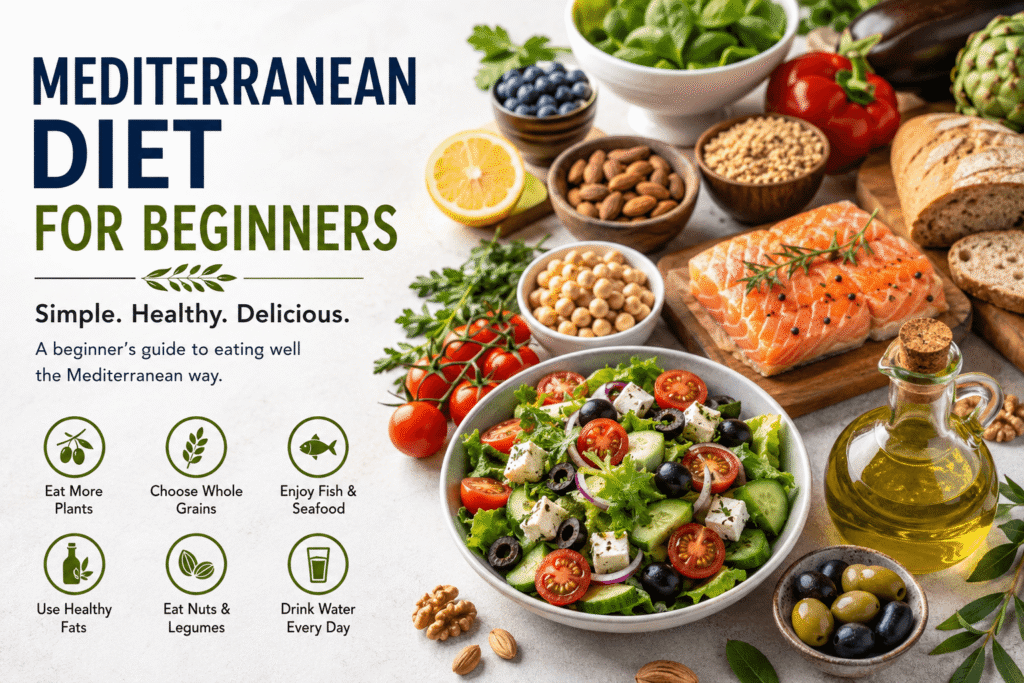
Starting a new diet can feel complicated. There are meal plans to follow, foods to avoid, calories to count, and conflicting advice everywhere you look. The Mediterranean diet for beginners offers a simpler alternative: instead of focusing on strict rules, it encourages a balanced eating pattern built around vegetables, fruits, whole grains, beans, nuts, fish, olive oil, and other minimally processed foods.
Despite its name, you do not need to live near the Mediterranean Sea to follow this style of eating. You can adapt it to foods available in the USA, Canada, Europe, the UK, or almost anywhere else.
The goal is not perfection. It is to gradually make nutritious foods the foundation of your everyday meals.
The Mediterranean diet for beginners is a simple and flexible approach to healthy eating that focuses on nutritious, minimally processed foods.
Table of Contents
- What Is the Mediterranean Diet?
- Why the Mediterranean Diet Matters
- Mediterranean Diet Food List
- Benefits of the Mediterranean Diet
- How to Start the Mediterranean Diet
- Simple Mediterranean Meal Ideas
- Common Mistakes to Avoid
- Mediterranean Diet Beginner Checklist
- Internal and External Link Placement
- Frequently Asked Questions
- Take the Next Step
- Conclusion
What Is the Mediterranean Diet?
The Mediterranean diet is best understood as an eating pattern rather than a rigid diet. There is no single menu that represents every Mediterranean country. However, traditional versions commonly emphasize plant foods, whole grains, legumes, olive oil, nuts, fruits, vegetables, herbs, and seafood, while limiting red and processed meats, sweets, and highly processed foods.
This flexibility is one reason the diet can be practical for beginners.
Instead of asking, “What foods are completely forbidden?” think about asking:
“What nutritious foods can I eat more often?”
That small change in mindset can make healthy eating feel much more sustainable.
Why the Mediterranean Diet Matters
Many modern eating patterns are built around convenience foods, sugary drinks, refined grains, and heavily processed meals. These foods can be convenient, but relying on them too often may make it harder to build a balanced diet.
The Mediterranean approach shifts attention toward food quality.
A typical meal might include:
- Plenty of vegetables
- A serving of whole grains
- Beans or another protein source
- Fish, poultry, or another lean protein
- Olive oil or nuts for healthy fats
- Fresh fruit for dessert
- Water as the main beverage
This does not mean every meal must look exactly like this. The bigger idea is to create a consistent pattern of nutritious choices.
Mediterranean Diet Food List for Beginners
Knowing what to put in your shopping basket is one of the easiest ways to start.
Vegetables and Fruits
Build your meals around colorful produce such as:
- Tomatoes
- Spinach
- Broccoli
- Peppers
- Carrots
- Aubergine/eggplant
- Leafy greens
- Apples
- Oranges
- Berries
- Grapes
- Peaches
Fresh, frozen, and many canned options can work. Frozen fruits and vegetables can also be practical because they can reduce food waste and make healthy ingredients easier to keep available.
Whole Grains
Choose whole-grain foods more often, including:
- Oats
- Brown rice
- Whole-grain bread
- Barley
- Whole-wheat pasta
- Quinoa
Whole grains provide carbohydrates along with fiber and other nutrients.
Beans and Legumes
Beans, lentils, chickpeas, and peas are excellent additions to Mediterranean-style meals.
Try chickpeas in salads, lentils in soups, or beans with whole-grain toast.
Healthy Fats
Olive oil is a signature ingredient, while nuts, seeds, avocados, and oily fish provide other sources of unsaturated fats.
However, healthy fats are still energy-dense. Using them generously does not automatically make a meal low-calorie.
Fish and Seafood
Fish is an important protein source in the Mediterranean pattern. Salmon, sardines, trout, tuna, and other seafood can be included regularly.
Poultry and eggs can also fit into the pattern, while red and processed meats are generally eaten less often.
Dairy Foods
Moderate amounts of foods such as plain yogurt and cheese can fit into a Mediterranean-style diet.
Choose options that work with your nutritional needs and preferences.
Benefits of the Mediterranean Diet
One reason this eating pattern receives so much attention is its strong research base.
Supports Heart Health
Research has associated Mediterranean-style eating with cardiovascular benefits. A 2024 systematic review of randomized controlled trials found that the Mediterranean diet was associated with reductions in major cardiovascular events, heart attack, stroke, and cardiovascular death, although the researchers also noted limitations in the available clinical-trial evidence.
May Support Healthy Weight Management
The Mediterranean diet is not automatically a weight-loss diet. Portion sizes and total calorie intake still matter.
However, replacing highly processed foods with vegetables, legumes, whole grains, nuts, fish, and other nutrient-rich foods can create a more satisfying eating pattern.
Harvard notes that the Mediterranean diet can be a useful model for healthy eating and may support weight loss when paired with appropriate calorie control.
Provides Fiber and Nutrients
Vegetables, fruits, whole grains, beans, nuts, and seeds provide fiber, vitamins, minerals, and other beneficial compounds.
Eating a wide variety of these foods also makes meals more interesting and nutritionally diverse.
Encourages Healthy Fats
The Mediterranean approach does not require avoiding all dietary fat.
Instead, it emphasizes healthier fat sources such as olive oil, nuts, seeds, and fish. This is an important distinction for people who grew up believing that every high-fat food should be avoided.
Can Be Flexible
You can adapt Mediterranean-style meals to different budgets, cultures, schedules, and food preferences.
For example, a beginner in the UK might enjoy grilled fish with potatoes and vegetables, while someone in the USA could prepare a chickpea and quinoa bowl. The principles remain similar even when the ingredients change.
How to Start the Mediterranean Diet: 7 Simple Steps
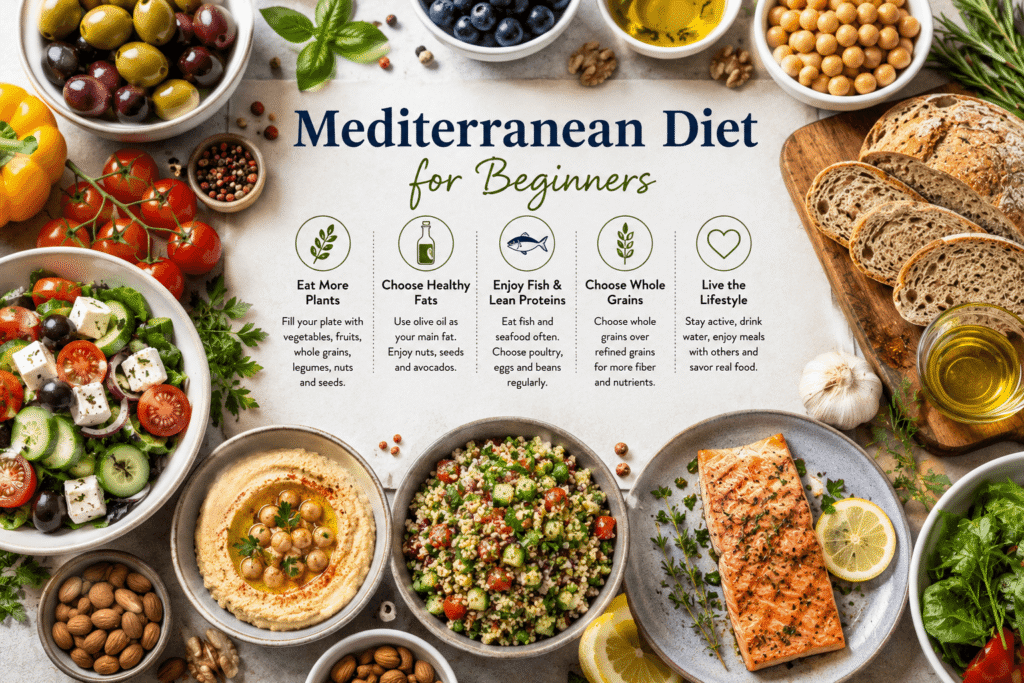
You do not need to change everything overnight.
1. Add Vegetables to Lunch and Dinner
Start by adding one extra serving of vegetables to meals you already enjoy.
Try spinach with eggs, roasted vegetables with chicken, or tomatoes and cucumber with lunch.
2. Replace Refined Grains Gradually
Switch white bread or pasta to whole-grain versions when practical.
If the taste or texture feels unfamiliar, start by mixing whole-grain and regular options.
3. Eat Beans More Often
Add chickpeas to salads, lentils to soups, or black beans to grain bowls.
This is an affordable strategy for adding plant-based protein and fiber.
4. Use Olive Oil Wisely
Use olive oil in salad dressings, vegetable dishes, or cooking where appropriate.
Think of it as a replacement for less desirable fats rather than an ingredient to add endlessly on top of your existing diet.
5. Make Fish a Regular Choice
If you eat seafood, consider adding fish to your weekly meal rotation.
For example, grilled salmon with vegetables and brown rice can make an easy Mediterranean-style dinner.
6. Make Water Your Main Drink
Water is the simplest everyday beverage choice.
Limit sugary drinks and reserve sweetened beverages for occasional consumption.
7. Focus on Consistency, Not Perfection
A restaurant meal, birthday cake, or takeaway does not ruin your progress.
The overall pattern matters more than one meal.
Simple Mediterranean Meal Ideas
You do not need complicated recipes to begin.
Mediterranean Breakfast
Try:
- Plain Greek yogurt
- Berries or sliced fruit
- Oats
- A small handful of nuts
- Cinnamon
Mediterranean Lunch
Create a simple bowl with:
- Chickpeas
- Cucumber
- Tomatoes
- Leafy greens
- Whole grains
- Olive oil and lemon dressing
Mediterranean Dinner
Try grilled salmon with:
Roasted vegetables
Brown rice or whole-grain bread
A simple salad
Fresh fruit
Mediterranean Snack
Good options include:
- Fresh fruit
- Unsalted nuts
- Plain yogurt
- Hummus with vegetables
Common Mediterranean Diet Mistakes to Avoid
Eating Too Much Olive Oil
Olive oil is nutritious, but it is still calorie-dense. More is not always better.
Treating the Diet as a List of Superfoods
Adding olive oil or nuts to an otherwise unbalanced diet does not magically create a Mediterranean diet.
The overall dietary pattern is what matters.
Ignoring Portions
Healthy foods can still contribute substantial calories when portions become very large.
Use your hunger, activity level, and individual nutritional needs to guide portions.
Eating Too Much Processed Food
A product can be marketed as “Mediterranean” without being particularly nutritious.
Check the ingredients and nutrition information rather than relying only on packaging claims.
Expecting Instant Results
Healthy eating is a long-term process.
Give yourself time to develop shopping, cooking, and meal-planning habits.
Mediterranean Diet Beginner Checklist
Use this simple checklist when planning your week:
- Buy several types of vegetables.
- Keep fresh or frozen fruit available.
- Add whole grains to your shopping list.
- Buy beans, lentils, or chickpeas.
- Keep nuts or seeds available for snacks.
- Choose fish or seafood when practical.
- Use olive oil as an everyday cooking or dressing option.
- Choose water as your main drink.
- Limit processed meats and sugary foods.
- Plan a few simple meals before grocery shopping.
Frequently Asked Questions
1. What is the Mediterranean diet for beginners?
The Mediterranean diet for beginners is a flexible eating pattern centered on vegetables, fruits, whole grains, beans, nuts, olive oil, fish, and other minimally processed foods. Red meat, processed meat, sweets, and highly processed foods are generally limited.
2. What foods can I eat on the Mediterranean diet?
You can eat vegetables, fruits, whole grains, beans, lentils, nuts, seeds, olive oil, fish, seafood, poultry, eggs, yogurt, and moderate amounts of cheese. The emphasis is on variety and overall food quality.
3. Can the Mediterranean diet help with weight loss?
It can support healthy weight management, especially when meals are balanced and portions match your energy needs. However, the Mediterranean diet itself does not guarantee weight loss. Overall calorie intake, physical activity, sleep, and individual factors also matter.
4. Can I eat bread and pasta on the Mediterranean diet?
Yes. Bread and pasta can fit into a Mediterranean eating pattern. Whenever possible, choose whole-grain varieties and combine them with vegetables, legumes, fish, or other nutritious foods.
5. Is the Mediterranean diet suitable for everyone?
Many people can adapt Mediterranean-style eating to their needs, but individual requirements vary. People with medical conditions, food allergies, or special dietary needs should discuss major dietary changes with a qualified healthcare professional. NHS guidance also recommends discussing dietary changes with your healthcare team when you have a medical condition or take medication.
Take the Next Step
Healthy eating does not have to mean following complicated rules.
If you are ready to improve your everyday nutrition, start with a few realistic changes: add more vegetables, choose whole grains, eat more legumes, include healthy fats, and make water your primary beverage.
For readers who want more personalized support, consider speaking with a registered dietitian or qualified nutrition professional who can adapt a Mediterranean-style approach to individual needs, preferences, budget, and lifestyle.
Start small today. One balanced meal can be the beginning of a healthier routine.
Conclusion
The Mediterranean diet for beginners is less about restriction and more about building a better overall relationship with food. Its foundation is simple: prioritize vegetables, fruits, whole grains, legumes, nuts, healthy fats, and fish while reducing highly processed foods, processed meats, excess sweets, and other less nutritious choices.
Its flexibility makes it practical for people across the USA, Canada, Europe, and the UK. You can use local ingredients, adapt traditional recipes, and create meals that suit your culture and lifestyle.
Most importantly, you do not need to transform your diet overnight. Start with one or two changes, repeat them consistently, and gradually build from there.
A sustainable eating pattern is not about being perfect. It is about making healthier choices often enough that they become part of everyday life.