Introduction
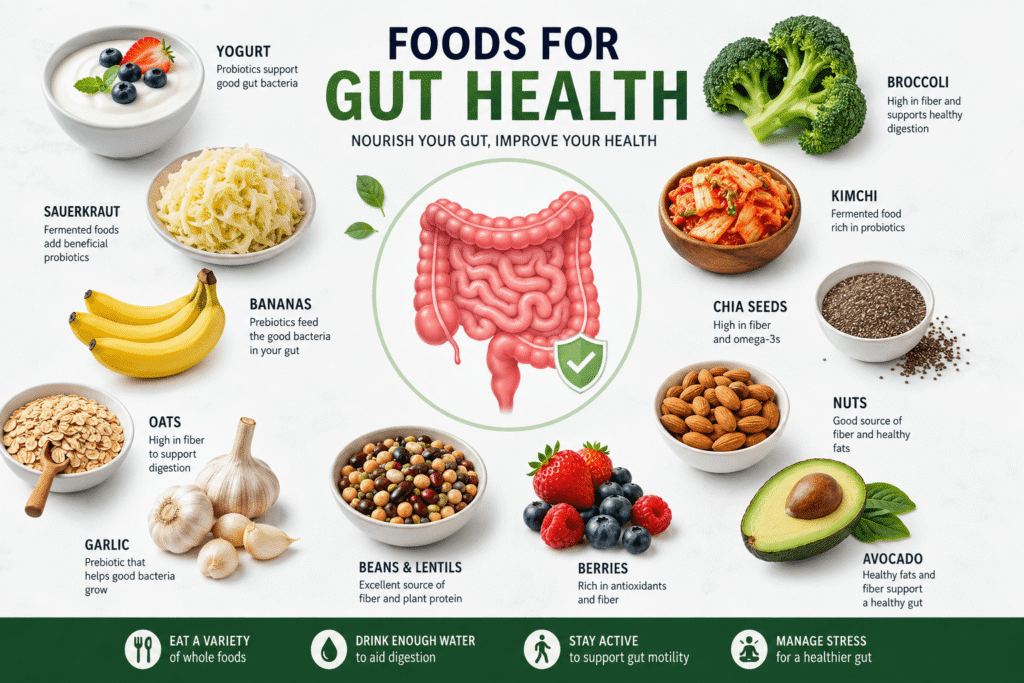
Your digestive system does much more than process food. Inside your gut lives a complex community of microorganisms that interacts with the foods you eat, your immune system, metabolism, and overall digestive function. That is why choosing the right foods for gut health can be an important part of a balanced eating pattern.
The good news is that supporting your gut does not require an expensive supplement routine or a complicated diet. Everyday foods such as oats, beans, berries, vegetables, nuts, seeds, yogurt, kefir, and fermented vegetables can provide fiber and other nutrients that help create a gut-friendly diet.
Research increasingly shows that diet can influence the composition and function of the gut microbiome, although individual responses can vary considerably.
This guide explains which foods can support a healthy gut, how to add them gradually, common mistakes to avoid, and simple ways to build gut-friendly meals.
Table of Contents
- Why Gut Health Matters
- Best Foods for Gut Health
- How These Foods Support Your Gut
- Benefits of a Gut-Friendly Diet
- How to Add More Gut-Healthy Foods
- Common Mistakes to Avoid
- Practical Gut Health Checklist
- Internal and External Link Placement
- Take the Next Step
- Frequently Asked Questions
- Conclusion
Why Gut Health Matters
The gut contains trillions of microorganisms, collectively known as the gut microbiome. These microorganisms interact with dietary components, particularly different types of dietary fiber.
Fiber is especially important because many fibers reach the colon where gut microbes can ferment them. This process produces compounds such as short-chain fatty acids that are involved in several aspects of gut and metabolic health.
For many adults, increasing fiber gradually can also help support regular bowel movements. The U.S. National Institute of Diabetes and Digestive and Kidney Diseases notes that adults generally need around 22–34 grams of fiber per day, depending on age and sex.
However, more is not always better overnight. Suddenly eating large amounts of beans, bran, or other high-fiber foods can cause gas and bloating. A gradual approach is usually easier to tolerate.
Best Foods for Gut Health
There is no single “magic” food for the microbiome. A better strategy is to eat a variety of plant foods while including appropriate fermented foods.
Here are some of the best options to consider.
1. Oats
Oats are an easy source of soluble fiber and can make a practical breakfast base.
Try overnight oats topped with berries, chia seeds, and plain yogurt. This combination brings together fiber, plant foods, and fermented dairy in one simple meal.
2. Beans and Lentils
Beans, lentils, chickpeas, and other legumes are naturally rich in dietary fiber.
They can be added to:
- Soups
- Salads
- Curries
- Grain bowls
- Wraps
- Homemade dips
If legumes tend to make you uncomfortable, start with a small portion and increase gradually.
3. Berries
Blueberries, raspberries, strawberries, and blackberries provide fiber and plant compounds called polyphenols.
Add berries to oatmeal, plain yogurt, smoothies, or a snack bowl instead of relying on highly processed sweet treats.
4. Apples and Pears
Apples and pears are convenient, affordable fruits that provide fiber, particularly when eaten with their edible skins.
A simple afternoon snack could be an apple with a small serving of nuts or nut butter.
5. Vegetables
Vegetables should form a major part of a gut-friendly eating pattern.
Good choices include:
- Broccoli
- Carrots
- Spinach
- Brussels sprouts
- Peas
- Sweet potatoes
- Cabbage
- Bell peppers
You do not need to eat every vegetable raw. Roasting, steaming, sautéing, or lightly cooking vegetables can make them easier to include regularly.
6. Whole Grains
Whole grains such as oats, barley, whole-wheat bread, brown rice, and whole-grain pasta provide more fiber than many refined grain alternatives.
Instead of completely changing your diet, try replacing one refined-grain food each day with a whole-grain alternative.
7. Nuts and Seeds
Almonds, walnuts, chia seeds, flaxseeds, and pumpkin seeds can add fiber, healthy fats, and other nutrients to meals.
For an easy breakfast, sprinkle chia or ground flaxseed over oatmeal or yogurt.
8. Plain Yogurt
Yogurt can be a useful fermented food, especially when the product contains live cultures.
However, not every fermented food automatically provides probiotics with proven health benefits. The NIH explains that probiotic effects depend on the specific microorganisms and strains involved.
Choose plain or lower-added-sugar yogurt and add fruit for natural sweetness.
9. Kefir
Kefir is a fermented milk drink that can contain multiple microorganisms.
It can be enjoyed on its own or blended into a smoothie with berries and oats.
People who are sensitive to dairy should choose an option that fits their individual tolerance.
10. Sauerkraut and Kimchi
Fermented vegetables such as sauerkraut and kimchi can add variety to meals.
Keep portions moderate at first, particularly if you are not used to fermented foods. Also check labels because some commercially prepared products can be high in sodium.
11. Garlic and Onions
Garlic and onions contain compounds that can be fermented by gut microorganisms.
They are also easy ways to make nutritious meals more flavorful without relying heavily on highly processed sauces.
12. Bananas
Bananas are convenient, versatile, and easy to add to breakfast or snacks.
Use sliced banana with oats, yogurt, or whole-grain toast for a quick meal.
13. Avocado
Avocado provides fiber and unsaturated fats. It works well in salads, whole-grain toast, grain bowls, and wraps.
14. Sweet Potatoes
Sweet potatoes provide fiber and can be prepared in many ways.
Try roasted sweet potato with lentils and vegetables for a simple plant-forward dinner.
15. Green Tea and Other Plant-Based Drinks
Unsweetened tea can contribute to overall hydration while providing plant compounds. However, beverages should complement—not replace—a diet built around whole foods.
Why Foods for Gut Health Matter
Fiber-Rich Foods for Gut Health
One of the most important reasons to prioritize plant foods is their fiber content.
Certain fibers are fermented by gut microorganisms. The resulting metabolites can interact with intestinal cells and broader physiological processes. Current research suggests that different fiber sources can affect the microbiome in different ways.
This is one reason dietary variety matters.
Fermented Foods for a Healthy Gut
Fermented foods can contain microorganisms and bioactive compounds produced during fermentation. Research suggests they may support gastrointestinal health, although more controlled human research is needed to understand exactly how different fermented foods affect different people.
Benefits of Foods for Gut Health
A balanced diet rich in fiber and minimally processed plant foods may help support several aspects of health.
Better Digestive Regularity
Fiber can help make stools softer and easier to pass, particularly when combined with adequate fluid intake.
Greater Dietary Variety
Eating different fruits, vegetables, legumes, whole grains, nuts, seeds, and fermented foods gives your diet a broader range of nutrients and plant compounds.
Support for the Gut Microbiome
Diet is an important factor shaping the gut microbiome. Different dietary patterns can influence microbial composition and function.
More Satisfying Meals
Fiber-rich foods often add volume and texture to meals, helping create satisfying dishes without depending heavily on highly processed foods.
How to Add More Gut-Healthy Foods
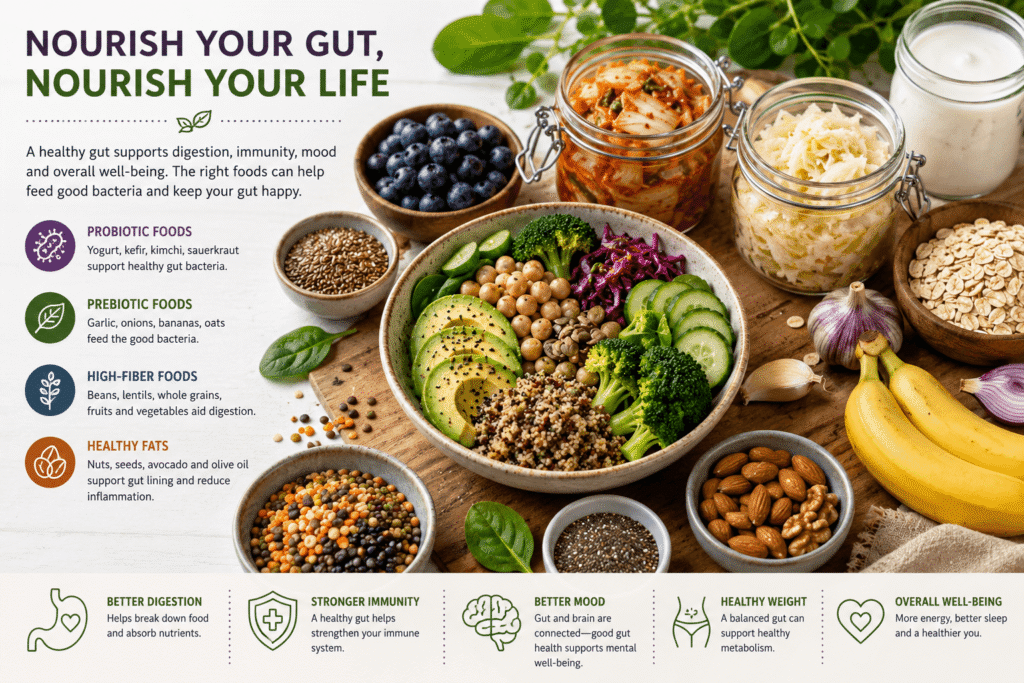
You do not need to transform your entire diet in one weekend.
Step 1: Start With Breakfast
Try:
Oatmeal + berries + chia seeds + plain yogurt
This gives you a combination of whole-food fiber and fermented dairy.
Step 2: Add One Vegetable to Lunch
Include a side salad, roasted vegetables, or vegetable soup.
Step 3: Replace One Refined Grain
Choose brown rice, barley, oats, or whole-grain bread instead of a refined option.
Step 4: Add Legumes Several Times a Week
Use lentils in soup, chickpeas in salads, or beans in a grain bowl.
Step 5: Experiment With Fermented Foods
Try a small serving of plain yogurt, kefir, kimchi, or sauerkraut and see how your body responds.
Step 6: Increase Fiber Gradually
If your current diet is low in fiber, increase it slowly rather than suddenly. NIDDK specifically recommends adding fiber gradually to help your body adjust.
Also drink enough fluids, because liquids help fiber work properly.
Benefits of Foods for Gut Health
Mistake 1: Eating Too Much Fiber Too Quickly
A sudden jump in fiber may cause gas, bloating, or abdominal discomfort.
Better approach: Increase portions gradually.
Mistake 2: Focusing on One “Superfood”
Gut health is not about finding one miracle ingredient.
Better approach: Build variety across the week.
Mistake 3: Assuming Every Fermented Food Is a Probiotic
Fermented does not automatically mean that a product contains a probiotic strain with a demonstrated health benefit.
Mistake 4: Ignoring Individual Tolerance
Some people with IBS or other digestive conditions may react differently to particular foods. NIDDK notes that dietary changes for IBS can vary from person to person.
Mistake 5: Depending on Supplements First
Food should generally be the foundation of a healthy eating pattern. If you are considering probiotic supplements, discuss the choice with a healthcare professional, particularly if you have an underlying health condition.
Practical Gut Health Checklist
Use this simple checklist when planning your meals:
- Eat a variety of fruits and vegetables.
- Include whole grains regularly.
- Add beans, lentils, or chickpeas.
- Include nuts or seeds.
- Try fermented foods that you tolerate well.
- Increase fiber gradually.
- Drink enough fluids.
- Limit reliance on highly processed foods.
- Pay attention to how your body responds.
- Seek professional advice for persistent digestive symptoms.
Support Your Health With Better Nutrition
Healthy digestion starts with everyday choices.
If you are struggling to create balanced meals, understand nutrition labels, or build a sustainable eating routine, consider getting personalized guidance rather than following random diet trends online.
Ready to improve your everyday nutrition? Explore more practical health and nutrition guides on Daily Nutrition Tips, and take one small step toward a more balanced lifestyle today.
Frequently Asked Questions
1. What are the best foods for gut health?
Some of the best foods for gut health include vegetables, fruits, beans, lentils, oats, whole grains, nuts, seeds, and suitable fermented foods such as yogurt and kefir.
2. What foods help improve gut health naturally?
A varied diet containing high-fiber plant foods and appropriate fermented foods can naturally support a healthy gut environment. Variety is more important than relying on one specific food.
3. How much fiber should adults eat each day?
Many adults need approximately 22–34 grams of fiber per day, depending on age and sex. If your current intake is low, increase fiber gradually and drink enough fluids.
4. Are fermented foods good for gut health?
Fermented foods can provide microorganisms and fermentation-derived compounds that may support gastrointestinal health. However, not every fermented product contains probiotics with proven benefits.
5. Can foods for gut health reduce bloating?
Some people may feel better when they gradually increase fiber and choose foods they tolerate well. However, bloating has many possible causes, and a food that helps one person may trigger symptoms in another. Persistent or severe symptoms should be discussed with a healthcare professional.
Conclusion
Choosing the right foods for gut health does not have to mean following a restrictive diet. The most practical approach is to build variety into your meals with vegetables, fruits, legumes, whole grains, nuts, seeds, and suitable fermented foods.
Start slowly. Add one new gut-friendly food at a time, increase fiber gradually, stay hydrated, and pay attention to your individual response.
Most importantly, think beyond individual “superfoods.” Your overall dietary pattern matters. Research continues to show that what we eat can shape the gut microbiome, while scientists are still learning exactly how these changes affect individual health.
For everyday wellness, a diverse, balanced diet built around minimally processed foods is a much more sustainable strategy than chasing the latest gut-health trend.