Introduction
What you eat first thing in the morning can affect how comfortable and energized you feel throughout the day. Knowing which foods to avoid on an empty stomach can help you make better breakfast choices and reduce the chance of digestive discomfort such as heartburn, nausea, bloating, or indigestion. While certain foods are not automatically harmful for everyone, some may trigger symptoms in people with sensitive stomachs or acid reflux.
For many people in the USA, Canada, the UK, and Europe, morning routines often include coffee, citrus juice, spicy foods, pastries, or other quick breakfast options. Understanding how these choices may affect your digestion can help you create a healthier and more comfortable start to your day.
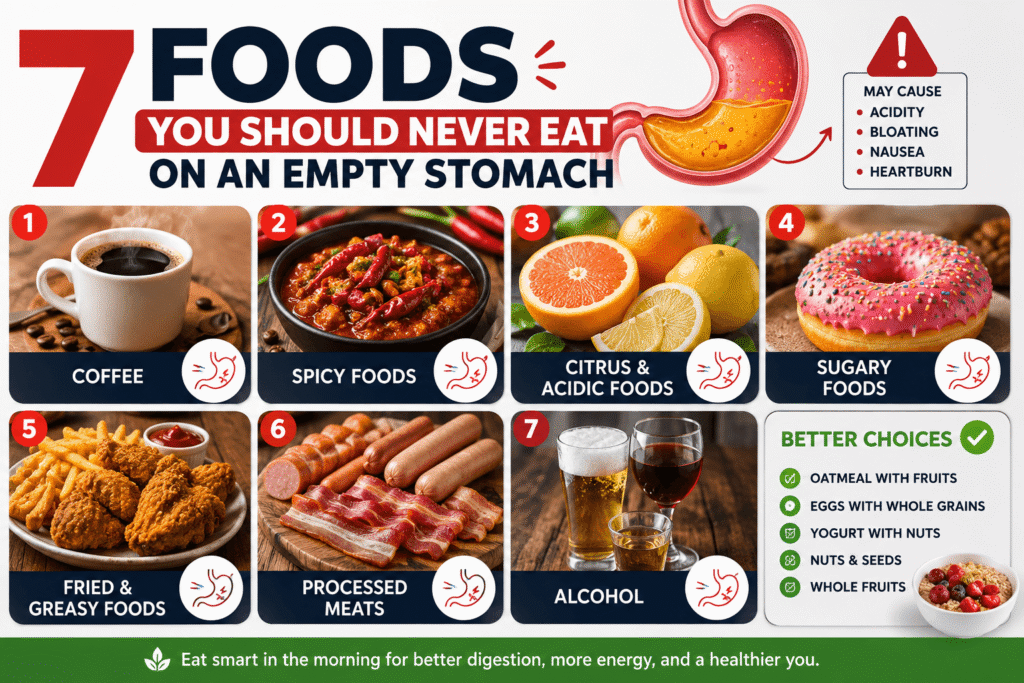
Coffee on an Empty Stomach
For millions of people in the USA, Canada, the UK, and Europe, coffee is part of the morning routine. But if you regularly experience heartburn, jitters, nausea, or stomach discomfort after your first cup, drinking coffee before eating may be worth reconsidering.
Coffee does not automatically harm an empty stomach, and many people can drink it without problems. Cleveland Clinic notes that most people tolerate coffee on an empty stomach, although caffeine and coffee may worsen reflux symptoms in people who are susceptible.
Coffee can also produce a stronger caffeine effect when consumed without food. Some people may experience increased nervousness, shakiness, or an urgent need to use the bathroom.
A better morning option
Instead of drinking a large, highly caffeinated coffee immediately after waking, try having it alongside breakfast.
A balanced breakfast containing protein, fiber, and healthy fats can make your morning meal more satisfying. Options include:
- Oatmeal with nuts and berries
- Whole-grain toast with eggs
- Greek yogurt with fruit and seeds
- Avocado toast with an egg
If coffee consistently causes heartburn, consider reducing your intake or discussing persistent symptoms with a healthcare professional.
2. Very Spicy Foods
Spicy foods can be delicious, but they may not be the gentlest choice when your stomach is completely empty.
Foods containing large amounts of chili peppers, hot sauce, or strong spices can aggravate digestive symptoms in some people. Spicy foods are also commonly associated with worsening symptoms in people who have GERD.
For example, eating a very spicy breakfast before having anything else may leave a sensitive person with burning discomfort, indigestion, or reflux.
That doesn’t mean you need to eliminate spicy foods from your diet. Instead, pay attention to how your body responds.
Try a gentler breakfast first
If you enjoy spicy food, consider eating it later in the day or pairing it with a balanced meal rather than eating a very spicy dish by itself.
Eggs with whole-grain toast, oatmeal, yogurt, or a mild vegetable breakfast may be easier options for people with sensitive digestion.
3. Citrus Fruits and Highly Acidic Foods
Oranges, grapefruit, lemons, and other citrus fruits provide valuable nutrients, including vitamin C. They are not inherently unhealthy.
However, highly acidic foods can be problematic for people who experience acid reflux or heartburn.
The National Institute of Diabetes and Digestive and Kidney Diseases lists citrus fruits and tomatoes among foods commonly associated with GERD symptoms.
For someone with a sensitive stomach, drinking a large glass of orange or grapefruit juice before breakfast may therefore cause burning or discomfort.
What can you do instead?
You don’t necessarily need to stop eating fruit. Try combining fruit with other foods.
For example:
Instead of:
A large glass of citrus juice alone
Try:
Oatmeal topped with banana and berries
Or:
Instead of:
Lemon water followed immediately by a large acidic meal
Try:
Plain water first, followed by a balanced breakfast if you’re hungry.
The goal isn’t to fear acidic foods. It’s to identify what works comfortably for your individual digestion.
4. Sugary Breakfast Foods
Donuts, pastries, sweetened cereals, muffins, cookies, and sugary breakfast bars can be tempting when you’re rushing to work or school.
The problem isn’t simply that these foods are sweet. A breakfast dominated by refined carbohydrates and added sugar may provide quick energy without offering much protein or fiber to keep you satisfied.
Highly sugary foods can also be particularly problematic for people trying to manage blood glucose levels. Mayo Clinic recommends a healthy eating pattern rich in nutrient-dense foods such as vegetables, fruits, whole grains, and appropriate protein sources for blood sugar management.
Build a more balanced breakfast
Instead of making a sugary pastry your entire breakfast, combine carbohydrates with protein and fiber.
Good combinations include:
- Oatmeal + nuts + berries
- Whole-grain toast + eggs + fruit
- Plain yogurt + fruit + seeds
- Whole-grain cereal + milk + berries
This simple change can make breakfast more nutritionally complete.
5. Fried and Greasy Foods
A heavy breakfast of fried potatoes, bacon, sausage, fried pastries, or other greasy foods may feel satisfying, but it can be uncomfortable for some people when eaten immediately after waking.
High-fat foods take longer to digest and may contribute to feelings of fullness or discomfort. They are also among foods that may worsen heartburn symptoms for some people.
This doesn’t mean every high-fat food is unhealthy. Foods such as avocado, nuts, seeds, and olive oil can be valuable parts of a balanced diet.
The bigger issue is large amounts of greasy or fried food, particularly when your digestive system is just getting started for the day.
A smarter swap
Instead of a heavily fried breakfast, consider:
- Scrambled or boiled eggs
- Whole-grain toast
- Fresh fruit
- Oatmeal
- Avocado
- Low-fat or plain Greek yogurt
You can still enjoy fried foods occasionally without making them your default breakfast.
6. Highly Processed Breakfast Meats
Processed meats such as bacon, sausages, and some breakfast meats are popular breakfast choices, particularly in Western diets.
The concern isn’t necessarily that eating one serving on an empty stomach will immediately cause harm. Rather, frequently relying on processed meats can make your overall breakfast higher in saturated fat and sodium, depending on the product and portion.
For a healthier everyday routine, consider rotating breakfast protein sources.
Better protein choices
Try including:
- Eggs
- Plain Greek yogurt
- Cottage cheese
- Beans
- Lentils
- Unsalted nuts and seeds
- Fish occasionally, depending on your preferences
A balanced breakfast doesn’t have to be complicated. Even two simple foods—such as eggs and whole-grain toast—can be a better foundation than relying heavily on processed breakfast meats.
7. Alcohol on an Empty Stomach
Alcohol deserves special attention because drinking it without food can affect the body differently from having it with a meal.
Alcohol can irritate the digestive tract and may worsen reflux symptoms in susceptible individuals. NIDDK lists alcoholic drinks among common dietary triggers associated with GERD symptoms.
More importantly, drinking alcohol without eating can make it easier to consume alcohol quickly, which can increase intoxication.
For that reason, alcohol should not be treated as part of a healthy breakfast routine or used as a substitute for food.
If you drink alcohol, follow local health guidance and be mindful of portion size, frequency, and whether you have medical conditions or medications that make alcohol inappropriate.
What Should You Eat on an Empty Stomach?
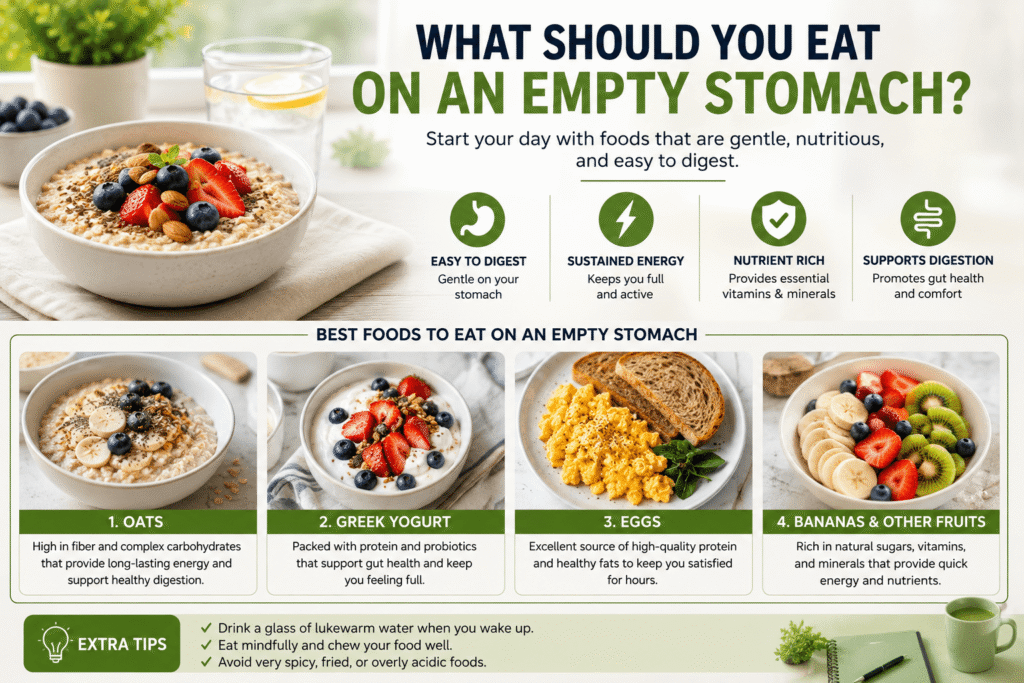
Now that we’ve covered foods to avoid on an empty stomach, what should you eat instead?
There is no single perfect breakfast for everyone. However, a meal combining several food groups can provide a more balanced nutritional foundation.
Consider this simple formula:
Protein + fiber-rich carbohydrate + fruit or vegetables + healthy fat
For example:
Option 1: Oatmeal Bowl
- Oats
- Banana or berries
- Chia seeds
- Nuts
- Plain yogurt or milk
Option 2: Savory Breakfast
- Eggs
- Whole-grain toast
- Avocado
- Tomatoes or another vegetable, if tolerated
Option 3: Quick Breakfast
- Greek yogurt
- Berries
- Nuts
- Whole-grain toast
Mayo Clinic’s healthy meal-planning guidance similarly emphasizes combining foods from different food groups rather than relying on a single type of food.
Are Foods Really Bad on an Empty Stomach?
This is an important question because social media often turns nutrition advice into strict rules.
The truth is more nuanced.
Coffee isn’t automatically bad on an empty stomach. Citrus fruit isn’t unhealthy. Spicy food isn’t dangerous for everyone. And you don’t need to follow a rigid list of forbidden breakfast foods.
Your individual tolerance matters.
For example, one person might drink black coffee every morning without experiencing any discomfort, while another may develop heartburn or jitters. Similarly, one person may enjoy oranges before breakfast, while another may experience acid reflux afterward.
The best approach is to notice patterns rather than automatically eliminating nutritious foods.
If a particular food repeatedly causes symptoms, reduce it, change when you eat it, or pair it with other foods.
How to Build Better Morning Eating Habits
A healthier morning routine doesn’t require an expensive supplement, complicated meal plan, or restrictive diet.
Start with a few practical habits:
Drink Water
Have water when you wake up, especially if you’re thirsty. Hydration is an important part of overall health.
Don’t Rush Your Breakfast
Eating quickly can make it harder to notice fullness and may contribute to digestive discomfort for some people.
Add Protein
Eggs, yogurt, cottage cheese, beans, nuts, and seeds can help make breakfast more satisfying.
Choose Whole Grains
Oats and whole-grain bread provide fiber and can make breakfast more substantial.
Limit Added Sugar
Choose naturally sweet foods such as fruit more often than highly processed sugary breakfast products.
Listen to Your Digestion
If coffee, citrus juice, or spicy foods repeatedly cause discomfort, don’t ignore the pattern.
When Should You Talk to a Doctor?
Occasional heartburn or mild digestive discomfort can happen to anyone. However, persistent or severe symptoms deserve medical attention.
According to NIDDK, symptoms such as persistent vomiting, difficulty swallowing, chest pain, unexplained weight loss, or signs of gastrointestinal bleeding require medical evaluation.
If you frequently experience heartburn, nausea, upper abdominal pain, or digestive problems after eating, don’t assume that a particular food is always the cause. Conditions such as GERD, gastritis, food intolerances, and other digestive disorders can have overlapping symptoms.
A healthcare professional can help identify the underlying problem.
Foods to Avoid on an Empty Stomach: Common Questions
1. What foods should you avoid on an empty stomach?
Some foods to avoid on an empty stomach if they trigger discomfort include very spicy foods, highly acidic foods, sugary breakfast foods, greasy meals, and alcohol. Coffee may also cause symptoms in people who are sensitive to caffeine or reflux.
2. Is coffee bad on an empty stomach?
Coffee is not automatically bad for everyone on an empty stomach. However, it may cause heartburn, nausea, jitters, or stomach discomfort in some people. Having coffee with or after breakfast may be more comfortable if you notice these symptoms.
3. Can I eat fruit on an empty stomach?
Yes. Most people can safely eat fruit on an empty stomach. Fruits provide important nutrients and fiber. However, acidic fruits such as oranges or grapefruit may worsen heartburn in people who are sensitive to acid reflux.
4. Is spicy food bad for an empty stomach?
Spicy food can cause burning, indigestion, or reflux symptoms in some people when eaten on an empty stomach. If spicy foods regularly cause discomfort, try eating them with a balanced meal instead.
5. What is the best food to eat first thing in the morning?
A balanced breakfast containing protein, fiber, and healthy carbohydrates is a good choice. Oatmeal with berries and nuts, eggs with whole-grain toast, or Greek yogurt with fruit and seeds are simple options.
Final Thoughts on Foods to Avoid on an Empty Stomach
Knowing which foods to avoid on an empty stomach can help you build a morning routine that feels better and supports balanced nutrition. However, there is no universal list of foods that everyone must avoid.
Coffee, citrus fruits, spicy foods, sugary breakfasts, fried foods, processed meats, and alcohol may be problematic for certain people, particularly those who already experience digestive symptoms.
Instead of following extreme food rules, focus on balance.
Choose breakfasts that combine protein, fiber, whole grains, fruits or vegetables, and healthy fats. Pay attention to how your body responds, and make adjustments when necessary.
Most importantly, remember that healthy eating is not about creating a long list of foods you can never eat. It’s about making informed choices that support your individual health and lifestyle.