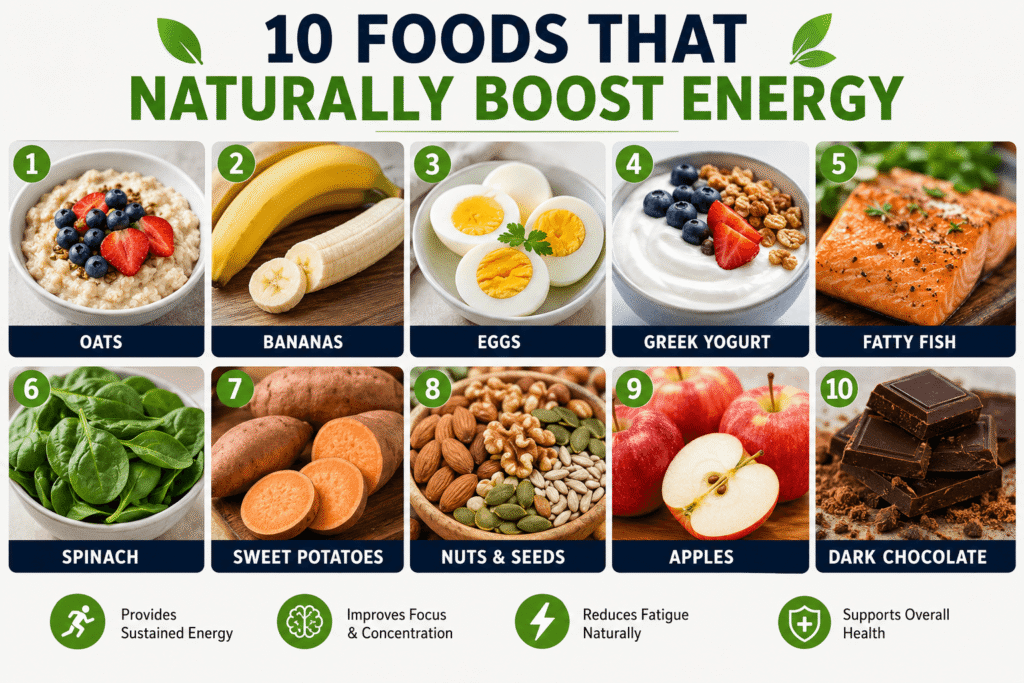
10 Foods That Naturally Boost Energy
Introduction
Foods That Naturally Boost Energy can help you stay active, focused, and productive throughout the day without relying on sugary snacks or excessive caffeine. Choosing nutrient-rich foods that provide steady, long-lasting fuel is one of the simplest ways to support your body’s natural energy production and improve your overall health.
Many people across the USA, Canada, Europe, and the UK experience afternoon fatigue, low concentration, and energy crashes caused by poor dietary choices. Fortunately, eating the right combination of complex carbohydrates, lean protein, healthy fats, vitamins, and minerals can make a significant difference.
In this guide, you’ll discover 10 foods that naturally boost energy, learn why they work, and find practical tips for adding them to your daily meals. Whether you’re a busy professional, student, fitness enthusiast, or simply looking to reduce fatigue naturally, these science-backed food choices can help you maintain consistent energy and support long-term wellness.
Table of Contents
- Why Energy-Boosting Foods Matter
- What Causes Low Energy?
- 10 Foods That Naturally Boost Energy
- Oats
- Bananas
- Eggs
- Greek Yogurt
- Fatty Fish
- Spinach
- Sweet Potatoes
- Nuts and Seeds
- Apples
- Dark Chocolate
- Benefits of Eating Energy Foods
- Best Practices
- Common Mistakes
- Practical Checklist
- FAQs
- Final Thoughts
Why Foods That Naturally Boost Energy Matter
Many people depend on coffee, energy drinks, or sugary snacks when they feel tired. While these options may provide a temporary boost, they often lead to an energy crash later in the day.
Natural foods work differently.
They provide a steady release of energy by supplying essential nutrients that support your body’s metabolism and help convert food into usable energy.
A balanced diet rich in whole foods can help:
- Maintain stable blood sugar levels
- Improve mental focus
- Support physical performance
- Reduce afternoon fatigue
- Improve mood
- Enhance productivity
- Promote better overall health
Instead of chasing temporary energy spikes, focus on building meals that nourish your body consistently.
What Causes Low Energy?
Before adding energy-boosting foods to your diet, it’s helpful to understand why energy levels decline in the first place.
Common causes include:
Poor Nutrition
Skipping meals or eating processed foods can deprive your body of essential nutrients needed for energy production.
Dehydration
Even mild dehydration can affect concentration, mood, and physical performance.
Poor Sleep
Nutrition supports energy, but quality sleep remains equally important.
Blood Sugar Spikes
Highly processed carbohydrates and sugary drinks often cause rapid increases in blood sugar followed by significant crashes.
Nutrient Deficiencies
Low levels of iron, vitamin B12, magnesium, and vitamin D may contribute to fatigue.
10 Foods That Naturally Boost Energy
1. Oats
Oats are among the best foods for long-lasting energy because they contain complex carbohydrates and soluble fiber.
Unlike refined cereals, oats digest slowly, providing a steady release of glucose into the bloodstream. This helps prevent sudden energy crashes while keeping you full for longer.
Oats are also rich in:
- Fiber
- Magnesium
- Iron
- B vitamins
These nutrients support healthy metabolism and energy production.
Easy Ways to Enjoy Oats
- Overnight oats
- Warm oatmeal with berries
- Homemade energy bars
- Smoothie bowls
- Healthy breakfast muffins
Pro Tip: Pair oats with Greek yogurt or nuts for additional protein.
2. Bananas
Bananas are often called nature’s energy bar—and for good reason.
They contain natural carbohydrates, potassium, vitamin B6, and fiber, making them an excellent pre-workout or midday snack.
Potassium supports muscle function, while vitamin B6 helps convert food into energy.
Bananas provide quick energy without the dramatic sugar crash associated with candy or processed snacks.
Best Times to Eat Bananas
- Before exercise
- Mid-morning snack
- Afternoon energy boost
- Blended into smoothies
- With peanut butter for extra protein
3. Eggs
Eggs are one of the most nutrient-dense foods available.
High-quality protein helps keep you satisfied while supporting muscle repair and energy production.
Eggs also provide:
- Vitamin B12
- Choline
- Selenium
- Healthy fats
- Riboflavin
These nutrients help your body efficiently convert food into usable energy.
Contrary to outdated myths, moderate egg consumption fits well within a healthy diet for most people.
Healthy Serving Ideas
- Boiled eggs
- Vegetable omelet
- Whole-grain avocado toast
- Egg salad with Greek yogurt
4. Greek Yogurt
Greek yogurt offers an excellent balance of protein and carbohydrates.
Protein slows digestion, allowing carbohydrates to provide a more sustained source of energy.
It is also rich in:
- Calcium
- Vitamin B12
- Probiotics
Healthy gut bacteria play an important role in nutrient absorption and overall well-being, which can indirectly support better energy levels.
Healthy Toppings
- Fresh berries
- Chia seeds
- Walnuts
- Pumpkin seeds
- Honey (in moderation)
5. Fatty Fish
Fatty fish such as salmon, sardines, and mackerel are excellent sources of omega-3 fatty acids and high-quality protein.
Omega-3 fats support brain health, reduce inflammation, and may help improve mental clarity and sustained energy.
Fatty fish also contain:
- Vitamin D
- Vitamin B12
- Selenium
- Iodine
These nutrients contribute to healthy metabolism and optimal body function.
Aim to eat oily fish two to three times per week as part of a balanced diet.
Healthy Meal Ideas
- Grilled salmon with vegetables
- Salmon salad
- Whole-grain salmon sandwich
- Baked mackerel with roasted sweet potatoes
- Sardines on whole-grain toast
6. Spinach
Spinach is one of the most nutrient-dense leafy greens and deserves a place on every healthy plate. It’s naturally rich in iron, magnesium, folate, vitamin C, and antioxidants that help your body produce energy efficiently.
Iron is especially important because it helps transport oxygen throughout the body. Low iron levels can lead to tiredness, reduced concentration, and lower physical performance.
Why Spinach Helps Boost Energy
- Supports healthy oxygen circulation
- Rich in iron and folate
- Contains magnesium for muscle function
- Low in calories but nutrient-dense
- Easy to add to many meals
Easy Ways to Eat More Spinach
- Add it to morning smoothies
- Mix into omelets
- Toss into salads
- Stir into soups
- Add to pasta or rice dishes
Tip: Pair spinach with vitamin C-rich foods like oranges, strawberries, or bell peppers to improve iron absorption.
7. Sweet Potatoes
Sweet potatoes provide slow-releasing carbohydrates that keep your energy levels stable throughout the day.
Unlike refined carbohydrates, they digest gradually, helping prevent sudden blood sugar spikes and crashes.
They’re also packed with:
- Fiber
- Vitamin A
- Vitamin C
- Potassium
- Manganese
These nutrients support immune health, muscle function, and overall energy production.
Healthy Serving Ideas
- Baked sweet potato
- Sweet potato wedges
- Mashed sweet potatoes
- Roasted vegetable bowls
- Sweet potato breakfast hash
8. Nuts and Seeds
Nuts and seeds are among the best portable snacks for sustained energy.
Almonds, walnuts, pistachios, pumpkin seeds, sunflower seeds, and chia seeds provide an excellent combination of healthy fats, protein, fiber, and important minerals.
They also contain magnesium, a mineral involved in hundreds of metabolic reactions that help produce energy.
Best Energy-Boosting Nuts
- Almonds
- Walnuts
- Cashews
- Pistachios
Best Energy-Boosting Seeds
- Chia seeds
- Pumpkin seeds
- Flaxseeds
- Sunflower seeds
A small handful makes an excellent afternoon snack that keeps hunger under control.
9. Apples
Apples are an excellent natural snack because they combine natural sugars with fiber.
The fiber slows the absorption of sugar, providing a steadier source of energy than processed sweets.
Apples also contain antioxidants that help reduce oxidative stress in the body.
Great Snack Combinations
- Apple slices with peanut butter
- Apple with cheese
- Apple and Greek yogurt
- Apple in oatmeal
- Fresh fruit salad
This combination of fiber and nutrients makes apples a smart choice for maintaining energy between meals.
10. Dark Chocolate
Good news for chocolate lovers—dark chocolate can be part of a healthy diet when enjoyed in moderation.
Dark chocolate contains:
- Magnesium
- Iron
- Antioxidants
- Flavonoids
- Small amounts of natural caffeine
These compounds may help improve blood flow, enhance mood, and provide a gentle energy boost.
Choose dark chocolate with at least 70% cocoa and enjoy a small portion rather than large amounts.
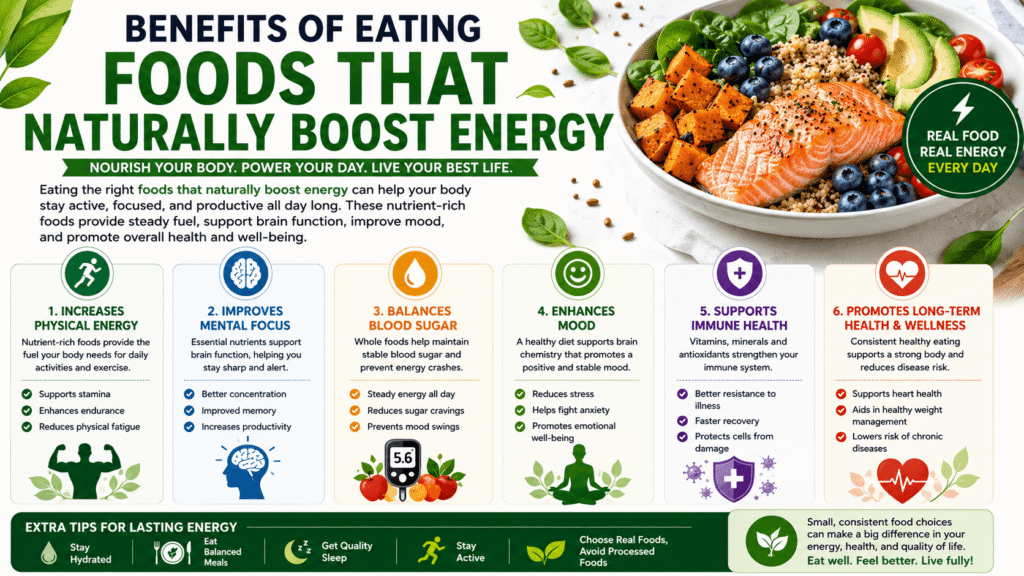
Benefits of Eating Foods That Naturally Boost Energy
Making these foods a regular part of your diet offers benefits beyond simply feeling less tired.
Increased Physical Energy
Whole foods provide consistent fuel that supports exercise, work, and daily activities.
Better Mental Focus
Nutrients such as omega-3 fats, B vitamins, and antioxidants help support brain function and concentration.
Improved Blood Sugar Control
Complex carbohydrates and fiber help stabilize blood sugar levels, reducing energy crashes.
Better Mood
Balanced nutrition supports healthy brain chemistry, which may positively influence mood and emotional well-being.
Long-Term Health
Many natural energy foods are also linked to heart health, healthy weight management, and a lower risk of chronic disease.
Best Practices for Maintaining Natural Energy
Eating energy-boosting foods is only one part of the equation. These habits can help maximize your results:
Eat Balanced Meals
Include:
- Lean protein
- Whole grains
- Healthy fats
- Fruits
- Vegetables
Stay Hydrated
Drink water regularly throughout the day, as even mild dehydration can reduce energy and focus.
Don’t Skip Breakfast
A nutritious breakfast provides fuel after an overnight fast and helps set the tone for the day.
Limit Added Sugar
Sugary drinks and processed snacks may offer quick energy but often lead to a crash.
Get Enough Sleep
Adults generally need 7–9 hours of quality sleep each night to support healthy energy levels.
Common Mistakes to Avoid
Many people unintentionally sabotage their energy levels by making these common mistakes:
- Skipping meals
- Drinking too many sugary beverages
- Depending solely on caffeine
- Eating highly processed foods
- Not drinking enough water
- Ignoring portion sizes
- Sleeping too little
- Following overly restrictive diets
Replacing these habits with balanced eating can make a noticeable difference in your daily energy.
Practical Daily Energy Checklist
Use this checklist to build lasting energy naturally:
✔ Eat a protein-rich breakfast
✔ Include fruits and vegetables with every meal
✔ Choose whole grains instead of refined grains
✔ Snack on nuts or yogurt instead of candy
✔ Drink plenty of water
✔ Eat fatty fish twice a week
✔ Add leafy greens to your meals
✔ Get regular physical activity
✔ Prioritize quality sleep
✔ Limit processed foods and excess sugar
Ready to Improve Your Energy Naturally?
Small dietary changes can make a big difference over time. Instead of relying on temporary fixes like energy drinks or sugary snacks, focus on building a balanced eating pattern filled with whole, nutrient-rich foods.
Explore more expert nutrition guides on Daily Nutrition Tips to discover practical advice, healthy recipes, and evidence-based wellness tips. If you’re looking to improve your eating habits, start by adding one or two of these energy-boosting foods to your meals this week and build from there.
Frequently Asked Questions (FAQs)
1. What are the best foods that naturally boost energy?
Some of the best foods that naturally boost energy include oats, bananas, eggs, spinach, sweet potatoes, fatty fish, Greek yogurt, apples, nuts, seeds, and dark chocolate. These foods provide a combination of complex carbohydrates, protein, healthy fats, vitamins, and minerals.
2. Can food really reduce fatigue?
Yes. A balanced diet with nutrient-rich foods can help reduce fatigue by providing steady energy, supporting healthy blood sugar levels, and supplying nutrients involved in energy production.
3. Are energy drinks healthier than natural foods?
No. Energy drinks often contain large amounts of sugar and caffeine, which may provide a temporary boost but can lead to crashes later. Whole foods offer more consistent and lasting energy.
4. Which breakfast is best for long-lasting energy?
A balanced breakfast such as oatmeal with berries and Greek yogurt, eggs with whole-grain toast, or a smoothie with spinach and banana can help provide sustained energy throughout the morning.
5. How quickly can I notice a difference?
Some people feel improvements within a few days of eating balanced meals and staying hydrated. Long-term energy benefits usually come from consistently following healthy eating habits and maintaining a healthy lifestyle.
Conclusion
Choosing the right foods that naturally boost energy is one of the simplest and most effective ways to improve your health, productivity, and overall well-being. Rather than depending on caffeine or sugary snacks, nourish your body with wholesome foods that provide steady, lasting fuel.
From fiber-rich oats and sweet potatoes to protein-packed eggs, Greek yogurt, and omega-3-rich fatty fish, each of these foods contributes valuable nutrients that help your body perform at its best.
Remember, lasting energy isn’t about a single “superfood”—it’s about creating balanced meals, staying hydrated, getting enough sleep, and maintaining healthy daily habits. Start by adding a few of these energy-boosting foods to your weekly meal plan, and over time you’ll likely notice better focus, improved stamina, and more consistent energy throughout the day.