Introduction
Your immune system works around the clock to protect your body from harmful bacteria, viruses, and other pathogens. While no single food can prevent illness, choosing the best foods to boost your immune system naturally can provide your body with the vitamins, minerals, antioxidants, and healthy fats it needs to function at its best.
Modern lifestyles often include processed foods, high stress levels, poor sleep, and limited physical activity—all of which can weaken immune health over time. Fortunately, a balanced diet rich in nutrient-dense whole foods can help strengthen your body’s natural defenses while supporting overall wellness.
Whether you live in the USA, Canada, the UK, or Europe, adding immune-supporting foods to your daily meals is one of the simplest and most effective ways to improve long-term health. In this guide, you’ll discover which foods offer the greatest immune benefits, why they matter, and how to include them in your everyday routine.
Table of Contents
- Why Nutrition Matters for Immune Health
- How Your Immune System Works
- Best Foods to Boost Your Immune System Naturally
- Key Nutrients That Support Immunity
- Benefits of an Immune-Friendly Diet
- Daily Tips for Better Immune Health
- Common Mistakes to Avoid
- Practical Immune Health Checklist
- Frequently Asked Questions
- Final Thoughts
Why Nutrition Matters for Immune Health
Your immune system depends on a steady supply of nutrients to create immune cells, repair damaged tissues, and respond effectively to infections. Poor nutrition can reduce your body’s ability to fight illness and may slow recovery when you do become sick.
Research consistently shows that people who consume a varied diet filled with fruits, vegetables, whole grains, lean proteins, and healthy fats tend to have stronger immune responses than those who rely heavily on processed foods.
Healthy eating also helps reduce chronic inflammation, maintain a healthy weight, and support gut health—all of which play important roles in immunity.
Key reasons nutrition supports immunity include:
- Supplies essential vitamins and minerals
- Supports healthy white blood cell production
- Reduces oxidative stress
- Promotes healthy gut bacteria
- Helps regulate inflammation
- Improves recovery after illness
Why the Best Foods to Boost Your Immune System Naturally Matter
Your immune system is made up of organs, tissues, and specialized cells that work together to identify and eliminate harmful invaders. It acts as your body’s natural defense network.
There are two main parts:
Innate Immunity
This is your body’s first line of defense. It includes your skin, mucus membranes, stomach acid, and immune cells that quickly respond to harmful microorganisms.
Adaptive Immunity
This system learns from previous infections and vaccinations. It produces antibodies that recognize and fight specific viruses or bacteria more efficiently in the future.
Nutrition supports both systems by providing the building blocks needed to create healthy immune cells and maintain effective communication between them.
15 Best Foods to Boost Your Immune System Naturally
Eating a colorful variety of whole foods gives your body access to hundreds of beneficial nutrients that work together to strengthen immunity.
Below are some of the most effective foods to include regularly.
1.Citrus Fruits for a Strong Immune System
Oranges, lemons, grapefruits, limes, and tangerines are among the best-known sources of vitamin C.
Vitamin C supports the production of white blood cells and helps protect cells from oxidative damage caused by free radicals.
Popular options include:
- Oranges
- Grapefruit
- Lemons
- Limes
- Mandarins
Try adding fresh citrus slices to water, salads, smoothies, or yogurt for an easy nutritional boost.
2.Red Bell Peppers – A Vitamin C Powerhouse
Many people are surprised to learn that red bell peppers contain significantly more vitamin C than oranges per serving.
They also provide:
- Vitamin A
- Beta-carotene
- Vitamin B6
- Fiber
These nutrients contribute to healthy skin, which serves as one of your body’s primary barriers against infection.
Roast them, grill them, or enjoy them raw with hummus.
3. Garlic as a Natural Immune Booster
Garlic has been valued for centuries because of its natural sulfur compounds, including allicin.
These compounds may help support immune function while also contributing to heart health.
Fresh garlic works well in:
- Soups
- Pasta dishes
- Stir-fries
- Roasted vegetables
- Homemade sauces
Adding garlic regularly can enhance both flavor and nutrition.
4. Ginger for Immune Health and Inflammation
Ginger contains natural plant compounds that possess antioxidant and anti-inflammatory properties.
Many people enjoy ginger because it may help:
- Support immune health
- Soothe sore throats
- Aid digestion
- Reduce nausea
- Promote overall wellness
Fresh ginger tea is an excellent addition during colder months.
5.Yogurt to Support Gut Health and Immunity
A healthy gut plays a major role in immune function because much of the immune system interacts closely with beneficial gut bacteria.
Choose plain yogurt that contains live and active cultures with little or no added sugar.
For extra nutrition, top yogurt with:
- Blueberries
- Walnuts
- Chia seeds
- Fresh strawberries
- Pumpkin seeds
6. Spinach for Natural Immune Support
Spinach delivers an impressive combination of nutrients that support overall health.
These include:
- Vitamin C
- Vitamin A
- Vitamin E
- Folate
- Iron
- Antioxidants
Lightly cooking spinach can improve the absorption of some nutrients while still preserving much of its vitamin C.
You can add spinach to:
- Smoothies
- Omelets
- Pasta
- Salads
- Soups
7. Almonds Rich in Vitamin E for Immune Function
Vitamin E is a fat-soluble antioxidant that helps protect immune cells from oxidative stress.
Almonds are an excellent source of:
- Vitamin E
- Healthy fats
- Magnesium
- Protein
- Fiber
A small handful makes a nutritious snack between meals.
8. Fatty Fish for Vitamin D and Immune Health
Salmon, sardines, trout, and mackerel provide omega-3 fatty acids that help regulate inflammation and support immune function.
They are also rich in:
- Vitamin D
- Protein
- Selenium
- Healthy fats
Aim to include fatty fish in your meals at least twice a week whenever possible.
9.Blueberries Packed with Immune-Boosting Antioxidants
Blueberries are packed with antioxidants, especially anthocyanins, which help protect your cells from oxidative stress. These tiny berries are also rich in vitamin C, vitamin K, and fiber.
Why They’re Great for Immunity
- Help fight free radicals
- Support healthy aging
- Promote heart health
- Provide natural anti-inflammatory compounds
Enjoy blueberries in:
- Smoothies
- Oatmeal
- Greek yogurt
- Fruit salads
- Healthy desserts
10. Broccoli – One of the Best Vegetables for Immunity
Broccoli is considered one of the most nutrient-dense vegetables available. It’s loaded with vitamins A, C, E, fiber, and powerful antioxidants.
To preserve its nutrients:
- Steam lightly instead of overcooking.
- Add it to stir-fries or roasted vegetable dishes.
- Pair it with olive oil for better absorption of fat-soluble vitamins.
11. Green Tea as a Natural Immune Booster
Green tea contains natural compounds called catechins, which are known for their antioxidant properties.
Benefits include:
- Supporting immune cell function
- Helping reduce oxidative stress
- Providing gentle hydration
- Supporting overall metabolic health
Replace one sugary beverage each day with green tea for an easy healthy swap.
12.Mushrooms That Help Support Your Immune System
Mushrooms such as shiitake, maitake, and oyster mushrooms contain bioactive compounds that may support normal immune function.
They also provide:
- Selenium
- B vitamins
- Copper
- Fiber
Add mushrooms to soups, pasta dishes, omelets, or grilled vegetable platters.
13. Pumpkin Seeds Rich in Zinc for Immunity
These small seeds are nutritional powerhouses.
They’re rich in:
- Zinc
- Magnesium
- Iron
- Healthy fats
- Plant-based protein
Zinc plays an essential role in the development and function of immune cells.
Sprinkle pumpkin seeds over:
- Salads
- Yogurt
- Oatmeal
- Smoothie bowls
14.Turmeric for Natural Immune Support
Turmeric contains curcumin, a natural compound known for its antioxidant and anti-inflammatory effects.
A simple way to enjoy turmeric is by adding it to:
- Soups
- Rice dishes
- Smoothies
- Roasted vegetables
- Golden milk
Pair turmeric with black pepper, which helps improve curcumin absorption.
15.Sweet Potatoes Rich in Vitamin A for Immune Health
Sweet potatoes are an excellent source of beta-carotene, which the body converts into vitamin A.
Vitamin A helps maintain healthy skin and mucous membranes—your body’s first line of defense against harmful germs.
Bake, mash, or roast sweet potatoes as a healthier alternative to processed side dishes.
Key Nutrients That Support Immune Health
Rather than focusing on one “superfood,” it’s more effective to ensure you’re getting a balanced intake of essential nutrients.
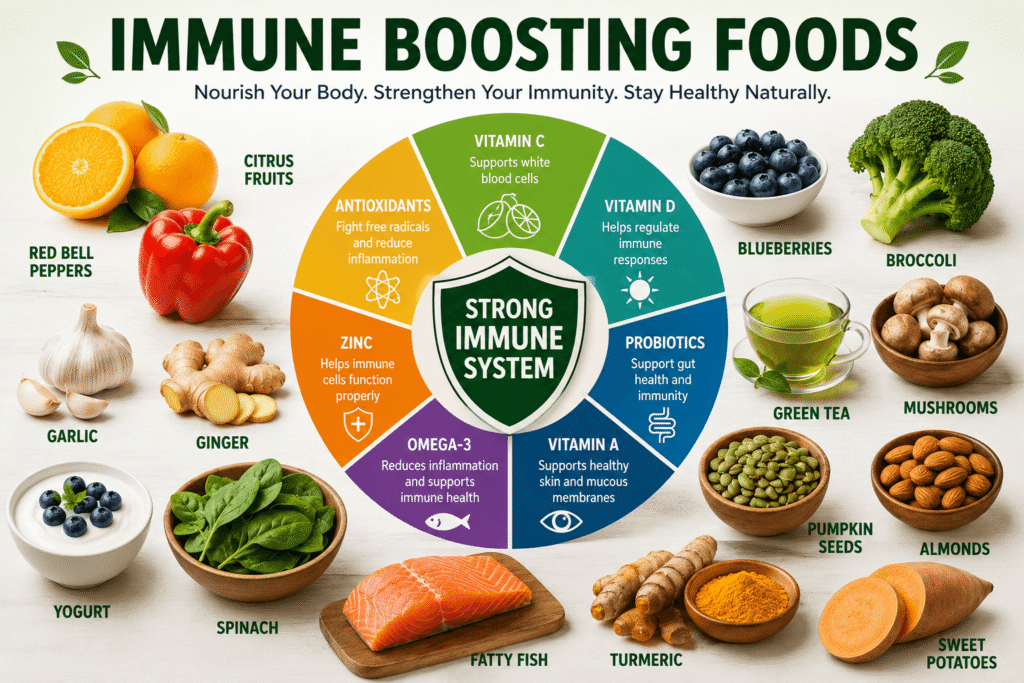
Nutrient Main Role Best Food Sources
Vitamin C / Supports white blood cells / Citrus fruits, strawberries, peppers
Vitamin D / Supports immune regulation / Fatty fish, fortified dairy, eggs
Vitamin A / Maintains protective barriers /Sweet potatoes, carrots, spinach
Vitamin E / Protects immune cells / Almonds, sunflower seeds
Zinc / Supports immune cell development /Pumpkin seeds, beans, seafood
Selenium / Antioxidant protection / Fish, eggs, Brazil nuts
Omega-3 Fatty Acids / Helps regulate inflammation / Salmon, sardines, walnuts
Probiotics / Promote gut health / Yogurt, kefir, fermented foods
Health Benefits of the Best Foods to Boost Your Immune System Naturally
Building an immune-friendly diet offers benefits that go beyond reducing your risk of illness.
Improved Energy Levels
Nutrient-rich foods help your body produce energy efficiently, reducing fatigue caused by poor nutrition.
Better Gut Health
A healthy digestive system supports a balanced gut microbiome, which plays a significant role in immune function.
Reduced Inflammation
Whole foods rich in antioxidants and healthy fats help reduce chronic inflammation associated with many health conditions.
Faster Recovery
Proper nutrition provides your body with the nutrients needed to repair tissues and recover after illness or physical activity.
Long-Term Wellness
Consistently eating immune-supporting foods contributes to:
- Better heart health
- Healthy aging
- Improved brain function
- Stronger bones
- Better metabolic health
Step-by-Step Guide to Building an Immune-Supporting Diet
Healthy eating doesn’t have to be complicated. Follow these practical habits to nourish your immune system every day.
Step 1: Fill Half Your Plate with Vegetables
Aim for a variety of colorful vegetables at lunch and dinner.
Step 2: Eat Fruit Every Day
Choose fresh, frozen, or unsweetened fruit instead of sugary snacks.
Step 3: Include Lean Protein
Good options include:
- Chicken
- Fish
- Beans
- Lentils
- Eggs
- Tofu
Step 4: Choose Whole Grains
Replace refined grains with:
- Brown rice
- Oats
- Quinoa
- Whole-grain bread
- Step 5: Add Healthy Fats
Healthy fats support nutrient absorption and overall wellness.
Choose:
- Olive oil
- Avocados
- Nuts
- Seeds
Step 6: Stay Hydrated
Water supports every system in your body, including immune function.
Common Mistakes That Can Weaken Your Immune System
Even with good intentions, certain habits can limit the benefits of a healthy diet.
Relying on Supplements Alone
Whole foods provide a combination of nutrients, fiber, and beneficial plant compounds that supplements cannot fully replicate.
Eating Too Many Ultra-Processed Foods
Highly processed snacks and sugary drinks may displace nutrient-rich foods from your diet.
Ignoring Gut Health
A healthy gut microbiome supports immune function, so include probiotic and fiber-rich foods regularly.
Skipping Sleep
Nutrition and quality sleep work together to maintain a healthy immune system.
Following Restrictive Diets Without Guidance
Eliminating entire food groups unnecessarily can lead to nutrient deficiencies.
Daily Checklist for Natural Immune Support
Use this simple checklist to build healthier habits:
✅ Eat at least five servings of fruits and vegetables.
✅ Include a source of protein with every meal.
✅ Drink enough water throughout the day.
✅ Eat foods rich in vitamin C and zinc.
✅ Include healthy fats like nuts or olive oil.
✅ Choose whole grains over refined grains.
✅ Limit added sugars and highly processed foods.
✅ Stay physically active.
✅ Prioritize quality sleep.
✅ Manage stress through relaxation or exercise.
Ready to Improve Your Health?
Eating the best foods to boost your immune system naturally is a powerful step toward better overall wellness. Small, consistent changes can make a meaningful difference over time.
If you’re looking for more expert nutrition advice, healthy recipes, and practical wellness tips, explore the latest articles on Daily Nutrition Tips. Discover easy strategies to build healthier habits, support your immune system, and make informed food choices every day.
Frequently Asked Questions About the Best Foods to Boost Your Immune System Naturally
What are the best foods to boost your immune system naturally?
The best foods to boost your immune system naturally include citrus fruits, berries, spinach, broccoli, garlic, ginger, yogurt, fatty fish, almonds, pumpkin seeds, mushrooms, sweet potatoes, and green tea. These foods provide essential vitamins, minerals, antioxidants, and healthy fats that help support normal immune function as part of a balanced diet.
Can food prevent colds or the flu?
No single food can completely prevent colds, flu, or other infections. However, eating a nutrient-rich diet helps your immune system function properly, which may improve your body’s ability to respond to illness and recover more effectively.
Which vitamin is most important for immune health?
Several vitamins work together to support immunity. The most important include:
Vitamin C
Vitamin D
Vitamin A
Vitamin E
Vitamin B6
Minerals such as zinc and selenium also play essential roles in maintaining a healthy immune system.
How does gut health affect the immune system?
Around 70% of the body’s immune cells are associated with the gut. A healthy gut microbiome helps regulate immune responses and supports overall health. Eating probiotic foods like yogurt and fiber-rich fruits, vegetables, legumes, and whole grains can promote a balanced digestive system.
How long does it take for healthy eating to support immunity?
Healthy eating is a long-term investment rather than a quick fix. While some people notice improved energy levels within a few weeks, consistently following a balanced diet, staying active, getting enough sleep, managing stress, and staying hydrated provide the greatest long-term benefits for immune health.
Conclusion
Your immune system works tirelessly to protect your body every day, and the food you eat plays an important role in keeping it functioning at its best. While there is no miracle food that guarantees perfect health, choosing the best foods to boost your immune system naturally can provide your body with the nutrients it needs to stay strong and resilient.
Focus on filling your plate with colorful fruits and vegetables, lean proteins, healthy fats, whole grains, nuts, seeds, and probiotic-rich foods. These nutrient-dense choices help reduce inflammation, support gut health, and provide vitamins and minerals that contribute to a healthy immune response.
Remember, nutrition is only one part of the picture. Regular physical activity, quality sleep, stress management, proper hydration, and avoiding smoking all work together to strengthen your body’s natural defenses.
Final Call-to-Action (CTA)
Ready to make healthier choices every day? Explore more expert-backed nutrition guides, healthy recipes, and wellness articles at Daily Nutrition Tips. Whether you’re looking to improve your immune health, lose weight, or create a balanced eating plan, you’ll find practical advice designed to help you succeed.
Don’t forget to bookmark our website and subscribe to stay updated with the latest nutrition tips, healthy lifestyle guides, and evidence-based wellness content.