Introduction
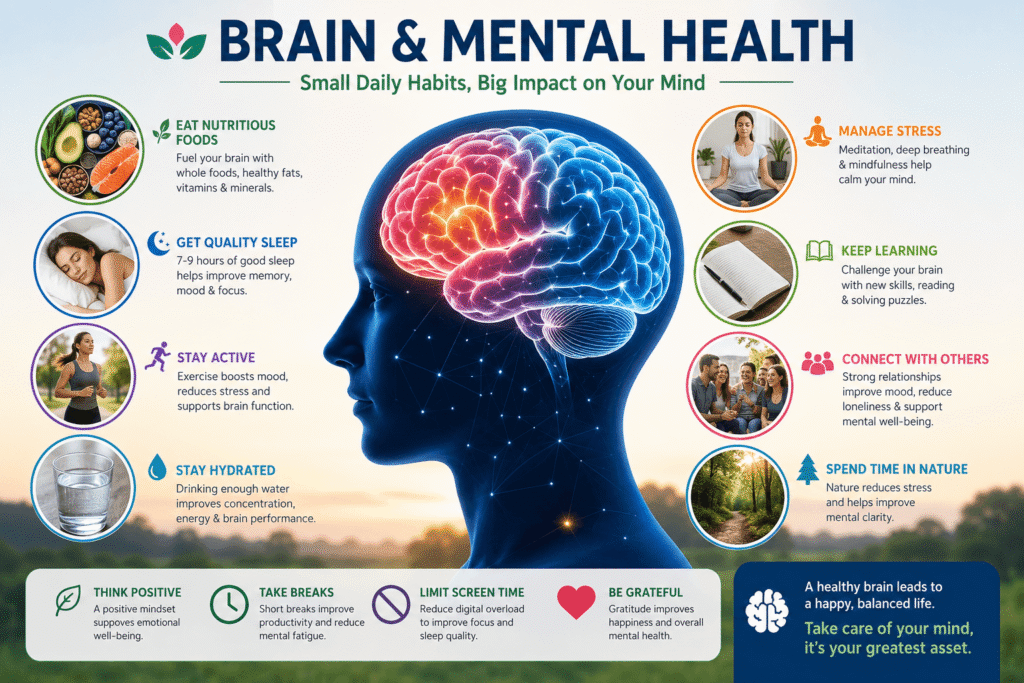
Brain and mental health play a powerful role in how we think, feel, make decisions, handle stress, and enjoy everyday life. In today’s fast-moving world, many people focus on physical fitness and nutrition while overlooking the importance of maintaining a healthy mind.
From busy work schedules and digital overload to poor sleep habits and constant stress, modern lifestyles can affect our mental wellbeing. The good news is that small daily choices can create meaningful improvements in brain function, emotional balance, and overall quality of life.
A healthy brain is not only about preventing problems. It is also about improving concentration, creativity, memory, confidence, and emotional resilience. Whether you are a student, professional, entrepreneur, or simply someone looking to feel better every day, supporting your brain health should be part of your wellness routine.
In this guide, we will explore the connection between brain and mental health, important habits that support cognitive performance, common mistakes to avoid, and practical strategies that can help you build a healthier mind.
Table of Contents
- Why Brain and Mental Health Matter Today
- Understanding the Connection Between Brain Health and Mental Wellness
- Key Benefits of Supporting Your Brain Health
- Nutrition and Its Role in Mental Performance
- Daily Habits That Improve Brain and Mental Health
- Common Mistakes That Harm Mental Wellbeing
- Practical Brain Health Checklist
- Helpful Internal and External Resources
- Take Action: Improve Your Mental Wellness Today
- Frequently Asked Questions
- Conclusion
Why Brain and Mental Health Matter Today
Our brain controls almost every activity in our body, including thoughts, emotions, movement, memory, and decision-making. When the brain functions well, we are better able to manage challenges, stay productive, and maintain positive relationships.
However, many people experience mental fatigue, difficulty concentrating, stress, and emotional exhaustion due to modern lifestyle pressures.
The Growing Importance of Mental Wellness
Mental wellbeing has become a major health priority worldwide. People are increasingly looking for ways to:
- Improve focus and concentration
- Manage daily stress
- Support emotional balance
- Increase productivity
- Improve sleep quality
- Maintain long-term brain function
Poor mental health can affect work performance, relationships, physical health, and overall happiness. This is why taking care of your mind is just as important as caring for your body.
Understanding the Connection Between Brain Health and Mental Wellness
How the Brain Influences Your Mental State
The brain and emotions are closely connected. Chemical messengers called neurotransmitters help regulate mood, motivation, stress response, and feelings of happiness.
Lifestyle factors such as diet, sleep, exercise, and stress levels can influence these processes.
For example:
- Regular physical activity can support better mood regulation.
- Balanced nutrition provides nutrients needed for brain function.
- Quality sleep helps memory and emotional processing.
- Relaxation techniques can reduce stress levels.
A healthy brain creates a stronger foundation for emotional stability and mental clarity.
The Role of Nutrition in Brain Function
What you eat can directly influence how your brain performs. The brain requires a steady supply of nutrients to maintain energy, communication between cells, and healthy cognitive function.
Foods commonly associated with brain support include:
- Fatty fish rich in omega-3 fatty acids
- Berries containing antioxidants
- Leafy green vegetables
- Nuts and seeds
- Whole grains
- Colorful fruits and vegetables
A balanced diet supports not only physical health but also mental energy and concentration.
Benefits of Supporting Brain and Mental Health
Taking care of your mind provides benefits that influence many areas of life.
1. Better Focus and Concentration
A healthy brain helps you stay focused on important tasks. Whether you are working, studying, or managing a business, improved concentration allows you to complete tasks more efficiently.
Simple habits like reducing distractions, taking breaks, and staying hydrated can support mental performance.
2. Improved Emotional Balance
Strong mental wellbeing helps you respond to challenges in a healthier way.
Instead of feeling overwhelmed by everyday problems, healthy coping strategies allow you to manage emotions more effectively.
Helpful practices include:
- Deep breathing exercises
- Mindfulness activities
- Spending time with supportive people
- Maintaining hobbies
- Practicing gratitude
3. Stronger Memory and Cognitive Performance
Brain-supportive habits may help maintain memory and cognitive abilities as we age.
Activities that challenge the brain, such as reading, learning new skills, puzzles, and creative hobbies, encourage continuous mental growth.
Nutrition and Its Role in Mental Performance
Many people understand that nutrition affects physical health, but fewer realize how strongly food choices can influence brain and mental health. The brain requires essential nutrients to produce energy, maintain communication between brain cells, and regulate mood.
A nutrient-rich diet does not replace professional mental health care when needed, but it can support overall mental wellbeing and improve the foundation for a healthier lifestyle.
Brain-Friendly Foods That Support Mental Wellness
Certain foods provide important nutrients that support cognitive function and emotional balance.
Omega-3 Rich Foods
Omega-3 fatty acids are important for brain structure and communication. They are commonly found in:
- Salmon
- Sardines
- Tuna
- Walnuts
- Chia seeds
- Flaxseeds
Including these foods regularly can support overall brain function as part of a balanced diet.
Antioxidant-Rich Fruits and Vegetables
Oxidative stress can affect brain cells over time. Antioxidant-rich foods help support the body’s natural protection systems.
Examples include:
- Blueberries
- Strawberries
- Spinach
- Broccoli
- Kale
- Oranges
These foods provide vitamins, minerals, and plant compounds that support overall wellness.
Whole Foods for Stable Energy
Highly processed foods and excessive sugar intake may contribute to energy fluctuations. Choosing whole foods can help maintain steady energy levels throughout the day.
Healthy choices include:
- Oats
- Brown rice
- Quinoa
- Beans
- Fresh vegetables
- Lean proteins
Daily Habits That Improve Brain and Mental Health
Improving your mental wellbeing does not always require major lifestyle changes. Small consistent habits can create positive results over time.
1. Prioritize Quality Sleep
Sleep is one of the most important factors for brain health. During sleep, the brain processes information, strengthens memories, and restores energy.
Poor sleep can affect:
- Concentration
- Mood regulation
- Decision-making
- Productivity
- Stress management
Tips for Better Sleep:
- Maintain a consistent sleep schedule
- Avoid screens before bedtime
- Create a relaxing nighttime routine
- Keep your bedroom comfortable and quiet
- Limit caffeine late in the day
A good sleep routine gives your brain the recovery time it needs.
2. Stay Physically Active
Exercise benefits both the body and the brain. Physical activity increases blood flow, supports brain function, and can improve mood.
You do not need intense workouts to experience benefits. Simple activities can help, such as:
- Walking daily
- Cycling
- Yoga
- Stretching exercises
- Strength training
For busy professionals and business owners, even a short daily walk can provide a valuable mental break.
3. Manage Daily Stress Effectively
Stress is a normal part of life, but long-term unmanaged stress can negatively affect mental wellbeing.
Healthy stress management strategies include:
Mindfulness Practices
Mindfulness helps you stay focused on the present moment instead of constantly worrying about the past or future.
Examples:
- Meditation
- Deep breathing
- Relaxation exercises
Creating Healthy Boundaries
Many people experience mental exhaustion because they do not create boundaries between work and personal life.
Helpful steps include:
- Taking regular breaks
- Limiting unnecessary notifications
- Scheduling personal time
- Learning to say no when necessary
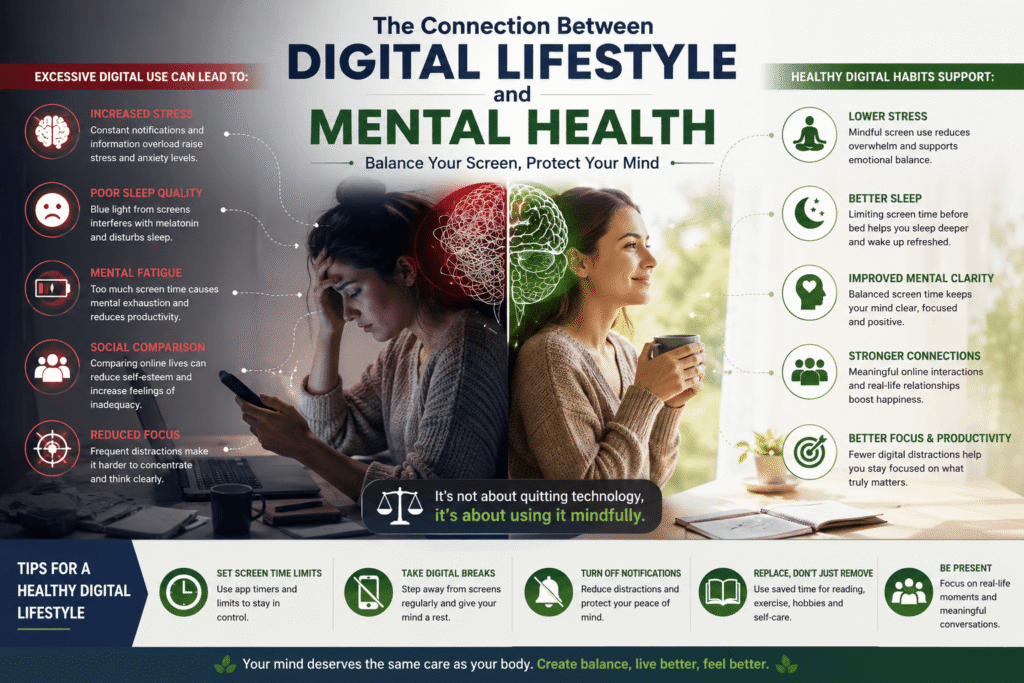
The Connection Between Digital Lifestyle and Mental Health
Technology has improved communication and productivity, but excessive screen use can affect mental wellness.
Constant exposure to:
- Social media comparison
- Online information overload
- Notifications
- Digital distractions
may contribute to stress and reduced attention span.
Creating a Healthier Digital Balance
Try these simple strategies:
- Take regular screen breaks
- Avoid checking your phone immediately after waking up
- Create technology-free periods
- Focus on meaningful online activities
A balanced relationship with technology supports better concentration and emotional health.
Common Mistakes That Can Harm Brain and Mental Health
Many people unintentionally develop habits that negatively affect their mental wellbeing.
Mistake 1: Ignoring Sleep Problems
Some people sacrifice sleep to complete more work. However, poor sleep can reduce productivity and increase stress.
Better approach:
Create a consistent sleep routine and treat rest as an essential part of health.
Mistake 2: Depending Only on Motivation
Motivation naturally changes. Building healthy systems and routines is more effective than relying only on willpower.
Better approach:
- Create realistic daily habits
- Set small goals
- Track progress consistently
Mistake 3: Poor Nutrition Choices
Skipping meals, consuming excessive processed foods, and not getting enough nutrients can affect energy and mental performance.
Better approach:
Focus on balanced meals containing:
- Protein
- Healthy fats
- Complex carbohydrates
- Fruits and vegetables
Mistake 4: Avoiding Social Connections
Human connection plays an important role in emotional wellbeing. Isolation can increase feelings of stress and loneliness.
Healthy relationships can provide:
- Emotional support
- Encouragement
- A sense of belonging
- Positive experiences
Make time for meaningful conversations with family, friends, or your community.
Step-by-Step Guide to Building Better Brain Health Habits
Creating better mental wellness habits becomes easier when you follow a simple approach.
Step 1: Evaluate Your Current Lifestyle
Start by identifying areas that need improvement.
Ask yourself:
- Am I sleeping enough?
- Am I eating balanced meals?
- Do I manage stress effectively?
- Do I make time for relaxation?
Understanding your current habits is the first step toward improvement.
Step 2: Make Small Changes First
Avoid trying to change everything overnight.
Start with simple actions:
- Drink more water
- Add one healthy meal daily
- Walk for 20 minutes
- Sleep 30 minutes earlier
- Practice five minutes of mindfulness
Small improvements become powerful when repeated consistently.
Step 3: Create a Long-Term Wellness Routine
A sustainable routine should include:
✔ Healthy nutrition
✔ Regular movement
✔ Quality sleep
✔ Stress management
✔ Social connection
✔ Mental stimulation
Consistency matters more than perfection.
Practical Brain and Mental Health Checklist
Use this checklist to support a healthier mind:
✅ Eat nutrient-rich foods daily
✅ Drink enough water
✅ Sleep 7–9 hours when possible
✅ Exercise regularly
✅ Take breaks from screens
✅ Practice relaxation techniques
✅ Learn new skills
✅ Maintain positive relationships
✅ Manage stress proactively
✅ Seek professional support when needed
Healthy Habits That Make a Long-Term Difference
Supporting brain and mental health is not about making one perfect decision—it is about creating a lifestyle that consistently encourages physical and emotional wellbeing. Every positive habit strengthens your ability to think clearly, manage challenges, and enjoy life more fully.
Build a Consistent Routine
Develop a routine that includes:
- Balanced meals every day
- Regular physical activity
- Consistent sleep schedule
- Mindfulness or relaxation exercises
- Daily hydration
- Time away from digital devices
- Meaningful social interactions
- Continuous learning and personal growth
Small actions practiced every day often produce greater long-term benefits than occasional major changes.
Signs You May Need Extra Support
While healthy habits are important, they are not a replacement for professional care. If you notice ongoing changes in your thoughts, emotions, or daily functioning, seeking support early can make a meaningful difference.
Consider speaking with a qualified healthcare professional if you experience:
- Persistent sadness lasting several weeks
- Constant anxiety or excessive worry
- Difficulty concentrating for extended periods
- Major changes in sleep or appetite
- Loss of interest in activities you once enjoyed
- Feeling overwhelmed most days
- Trouble managing everyday responsibilities
Early support can improve outcomes and help you regain confidence in managing your mental wellbeing.
Simple Daily Brain Health Routine
Here is an easy routine that almost anyone can follow:
Morning
- Drink a glass of water after waking up.
- Eat a nutritious breakfast with protein and whole grains.
- Spend five minutes planning your day.
Afternoon
- Take short movement breaks every hour.
- Choose healthy snacks such as fruit or nuts.
- Stay hydrated throughout the day.
Evening
- Enjoy a balanced dinner.
- Reduce screen time one hour before bed.
- Practice relaxation techniques or read a book.
- Aim for 7–9 hours of quality sleep.
Following these simple habits consistently can help support both brain function and emotional wellbeing.
Call to Action
Start Improving Your Brain and Mental Health Today
Your brain is one of your body’s most valuable assets, and taking care of it is an investment in your future. Small, healthy choices made consistently can improve focus, emotional resilience, productivity, and overall quality of life.
At Daily Nutrition Tips, we are committed to providing practical, science-informed advice to help you make healthier lifestyle decisions.
Ready to take the next step?
- Explore more expert nutrition and wellness guides.
- Learn how healthy eating supports brain function.
- Build sustainable habits for long-term wellbeing.
- Subscribe to receive the latest health and nutrition tips directly in your inbox.
Every positive choice you make today supports a healthier tomorrow.
Frequently Asked Questions (FAQ)
What is brain and mental health?
Brain and mental health refers to the overall wellbeing of your brain and emotional state. It affects how you think, learn, remember, handle stress, and interact with others.
Which foods are best for brain and mental health?
Foods that support brain health include:
- Fatty fish
- Nuts and seeds
- Leafy green vegetables
- Berries
- Whole grains
- Eggs
- Legumes
- Colorful fruits and vegetables
A balanced diet provides nutrients that support normal brain function.
How does exercise improve brain health?
Regular physical activity increases blood flow to the brain, supports cognitive function, helps manage stress, and contributes to better overall mental wellbeing.
Even 30 minutes of moderate activity most days of the week can have lasting benefits.
Can poor sleep affect mental health?
Yes. Poor sleep can reduce concentration, affect mood, lower productivity, and make it harder to manage daily stress.
Creating healthy sleep habits is an important part of maintaining good brain and mental health.
What are simple ways to improve brain and mental health naturally?
Some practical habits include:
- Eating nutritious meals
- Staying physically active
- Drinking enough water
- Managing stress
- Sleeping well
- Learning new skills
- Limiting excessive screen time
- Maintaining strong social relationships
Consistency is the key to long-term success.
Conclusion
Maintaining brain and mental health is essential for living a productive, balanced, and fulfilling life. Your daily habits—including nutrition, exercise, sleep, stress management, and meaningful relationships—play a significant role in supporting cognitive performance and emotional wellbeing.
Rather than aiming for perfection, focus on making small, sustainable improvements that fit your lifestyle. Over time, these habits can enhance your memory, sharpen your focus, strengthen emotional resilience, and contribute to better overall health.
Remember that mental wellness is an ongoing journey. Stay curious, continue learning, and seek professional guidance whenever you need additional support.
By making brain and mental health a priority today, you are investing in a healthier, happier future.