Introduction
If you’ve been struggling with persistent flakes, you’re not alone. Common dandruff mistakes often prevent people from getting the results they want, even after trying expensive shampoos and hair treatments. While dandruff is one of the most common scalp conditions worldwide, many people unknowingly make everyday hair care mistakes that worsen itching, irritation, and visible flakes.
The good news is that dandruff is usually manageable with the right scalp care routine and healthy habits. Whether your flakes are caused by excess oil, dry skin, or sensitivity to hair products, identifying what’s going wrong is the first step toward lasting relief.
In this guide, you’ll discover the seven most common dandruff mistakes, learn why they happen, and find practical, expert-backed solutions that can help you achieve a healthier scalp and cleaner-looking hair.
Table of Contents
- Why Understanding Dandruff Matters
- What Causes Dandruff?
- Mistake #1: Using the Wrong Shampoo
- Mistake #2: Washing Your Hair Too Often—or Not Enough
- Mistake #3: Ignoring Product Buildup
- Why Fixing These Mistakes Improves Scalp Health
- Practical Tips for Better Results
- Common Mistakes to Avoid
- Checklist for Healthy Scalp Care
- Frequently Asked Questions
- Final Thoughts
Why Understanding Common Dandruff Mistakes Matters
Dandruff isn’t just a cosmetic concern. It can affect your confidence, make social situations uncomfortable, and even lead to excessive scratching that damages the scalp. Many people assume dandruff is simply caused by dry skin, but the reality is much more complex.
Several factors can contribute to dandruff, including:
- Overgrowth of scalp yeast
- Excess oil production
- Dry weather
- Harsh hair products
- Poor scalp hygiene
- Stress
- Skin conditions such as seborrheic dermatitis
Unfortunately, treating dandruff without understanding its root cause often leads to frustration. Instead of improving, symptoms may continue for weeks or months.
By avoiding common mistakes and following a science-backed scalp care routine, you can significantly reduce flakes and itching.
What Actually Causes Dandruff?
Before discussing the mistakes, it’s important to understand what dandruff really is.
Dandruff occurs when skin cells on the scalp shed faster than normal. These dead cells mix with natural oils and become visible as white or yellow flakes.
Several common triggers include:
Excess Oil
An oily scalp creates an environment where naturally occurring yeast can multiply rapidly, increasing irritation and flaking
Dry Skin
Cold weather, indoor heating, and harsh shampoos can strip away natural moisture, causing dryness and peeling.
Product Sensitivity
Certain fragrances, preservatives, and chemicals in styling products may irritate the scalp and worsen dandruff symptoms.
Poor Hair Care Habits
Skipping shampoo, overusing styling products, or neglecting scalp hygiene can all contribute to persistent flakes.
Common Dandruff Mistakes That Keep Flakes Coming Back
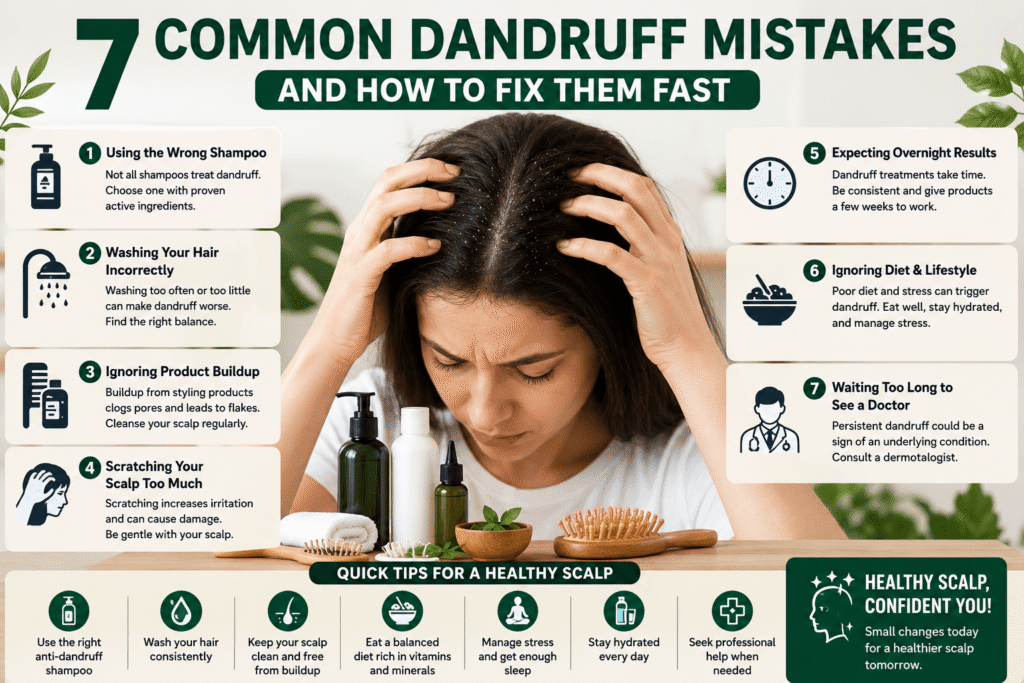
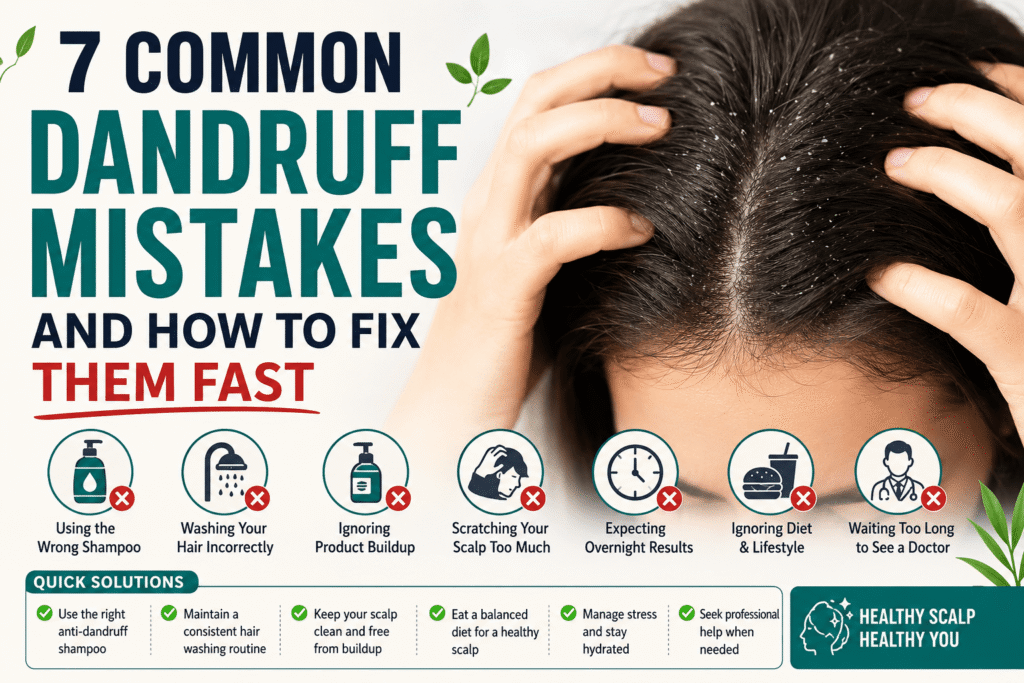
Mistake #1 – Using the Wrong Shampoo
One of the biggest reasons dandruff refuses to disappear is choosing a shampoo that doesn’t match your scalp condition.
Many people buy products labeled “anti-dandruff” without checking the active ingredients. Different ingredients target different causes of dandruff.
For example:
- Zinc pyrithione helps reduce yeast growth.
- Ketoconazole targets fungal overgrowth.
- Selenium sulfide slows skin cell turnover.
- Salicylic acid helps remove thick flakes.
Using the wrong formula may leave dandruff untreated while causing unnecessary dryness or irritation.
How to Fix It
- Read ingredient labels carefully.
- Choose a shampoo based on your symptoms.
- Follow the product instructions consistently.
- Give a treatment shampoo several weeks before switching.
If symptoms continue after several weeks, consult a dermatologist rather than constantly changing products.
Mistake #2 – Washing Your Hair Too Often (or Not Enough)
Finding the right washing frequency is essential for scalp health.
Many people believe washing every day will eliminate dandruff. Others avoid shampoo because they think it dries out the scalp.
Both extremes can make dandruff worse.
Washing Too Often
Frequent washing may strip away natural oils, leaving the scalp dry, irritated, and prone to flaking.
Washing Too Little
On the other hand, infrequent washing allows oil, sweat, dead skin, and styling products to accumulate. This buildup creates an ideal environment for dandruff-causing microorganisms.
How to Fix It
A balanced routine works best.
General recommendations include:
- Oily hair: Wash every 1–2 days.
- Normal hair: Wash 2–3 times weekly.
- Dry or curly hair: Wash as needed while keeping the scalp clean.
Use lukewarm water instead of hot water, as excessive heat can dry and irritate the scalp.
Mistake #3 – Ignoring Product Buildup
Hair sprays, dry shampoo, gels, waxes, and leave-in conditioners can gradually accumulate on the scalp.
When buildup isn’t removed regularly, it traps oil and dead skin while reducing the effectiveness of medicated shampoos.
Signs of product buildup include:
- Hair feels heavy after washing.
- Persistent flakes despite treatment.
- Oily roots.
- Scalp itching.
- Dull-looking hair.
How to Fix It
Use a gentle clarifying shampoo occasionally to remove residue without damaging your hair.
If you frequently use styling products, consider clarifying once every two to four weeks, depending on your hair type.
Avoid applying styling products directly to the scalp unless specifically designed for scalp use.
Benefits of Correcting These Dandruff Mistakes
Small improvements in your daily routine can produce noticeable results over time.
Benefits include:
- Fewer visible flakes
- Less scalp itching
- Reduced redness and irritation
- Stronger hair appearance
- Improved confidence
- Healthier scalp microbiome
- Better effectiveness from treatment shampoos
- Reduced risk of recurring dandruff
Consistency is key. Most people begin noticing improvements within a few weeks when they follow an appropriate scalp care routine and avoid habits that contribute to dandruff.
Mistake #4 – Scratching Your Scalp Too Much
An itchy scalp can be incredibly frustrating, but constantly scratching it can make the problem worse. While scratching may provide temporary relief, it can damage the skin’s protective barrier, increase inflammation, and even lead to small cuts that are vulnerable to infection.
Over time, excessive scratching may also weaken hair follicles, contributing to hair breakage or temporary hair loss.
How to Fix It
Instead of scratching:
- Use a medicated anti-dandruff shampoo consistently.
- Massage your scalp gently with your fingertips—not your nails.
- Avoid hot showers, which can increase itching.
- If itching is severe or persistent, consult a dermatologist.
Keeping your scalp moisturized and treating the underlying cause of dandruff is far more effective than scratching away the flakes.
Mistake #5 – Expecting Overnight Results
One of the biggest reasons people give up on dandruff treatments is expecting instant improvement. Although many products promise quick relief, most medicated shampoos need time to work.
Switching between different products every few days can prevent you from seeing real results.
How to Fix It
Be patient and consistent.
For the best outcome:
- Use your treatment shampoo exactly as directed.
- Leave it on your scalp for several minutes before rinsing.
- Continue using it for at least 2–4 weeks unless irritation occurs.
- Once dandruff improves, maintain your results with occasional use.
Remember, healthy scalp care is a long-term habit rather than a one-time solution.
Mistake #6 – Ignoring Your Diet and Lifestyle
Many people focus only on hair products while overlooking the role nutrition and lifestyle play in scalp health.
Although diet isn’t the direct cause of dandruff, poor nutrition and chronic stress may contribute to inflammation and affect overall skin health.
A balanced lifestyle supports healthy hair and scalp from the inside out.
Nutrients That Support Scalp Health
Include foods rich in:
- Omega-3 fatty acids
- Zinc
- Vitamin D
- B vitamins
- Protein
- Iron
- Antioxidants
Foods such as salmon, eggs, leafy greens, nuts, seeds, beans, and yogurt can support healthy skin and hair.
Staying hydrated is equally important, as dehydration may contribute to dry skin.
Stress management also matters. Chronic stress can trigger flare-ups in some people, making dandruff harder to control.
Mistake #7 – Waiting Too Long to See a Dermatologist
Sometimes dandruff isn’t actually dandruff.
Conditions like eczema, psoriasis, seborrheic dermatitis, fungal infections, or allergic reactions can produce symptoms similar to dandruff.
If over-the-counter treatments fail after several weeks, professional evaluation is the safest next step.
Signs You Should See a Doctor
- Severe redness
- Thick yellow scales
- Bleeding from scratching
- Hair loss
- Painful scalp
- Symptoms lasting longer than one month
- No improvement after using medicated shampoo
A dermatologist can diagnose the exact cause and recommend prescription-strength treatments if necessary.
Step-by-Step Routine for a Healthier Scalp
If you’re ready to reduce flakes and improve scalp health, follow this simple routine:
Step 1
Choose an anti-dandruff shampoo with the appropriate active ingredient for your symptoms.
Step 2
Wash your hair according to your hair type rather than following trends.
Step 3
Massage the shampoo gently into your scalp and allow it to sit for several minutes before rinsing.
Step 4
Avoid excessive use of styling products that leave residue on the scalp.
Step 5
Eat a balanced diet rich in vitamins, minerals, and healthy fats.
Step 6
Reduce stress through regular exercise, quality sleep, or mindfulness techniques.
Step 7
Monitor your progress over several weeks and seek medical advice if symptoms persist.
Practical Healthy Scalp Checklist
Use this quick checklist to improve your scalp care routine:
✔ Choose the right anti-dandruff shampoo
✔ Wash your hair consistently
✔ Avoid scratching your scalp
✔ Remove product buildup regularly
✔ Stay hydrated
✔ Eat nutrient-rich foods
✔ Manage stress levels
✔ Keep styling products away from the scalp
✔ Replace old hairbrushes when necessary
✔ Visit a dermatologist if dandruff doesn’t improve
Take Control of Your Scalp Health Today
Dandruff doesn’t have to be a lifelong struggle. By avoiding these common mistakes and adopting healthier scalp care habits, you can significantly reduce flakes, itching, and irritation.
At Daily Nutrition Tips, we’re committed to helping you build healthier habits from the inside out. Explore our expert articles on nutrition, wellness, and hair care to support your overall health journey.
Call to Action
Ready to improve your hair and scalp health?
Browse more expert wellness guides on Daily Nutrition Tips, subscribe to our newsletter for practical health advice, and discover simple strategies that help you look and feel your best every day.
Frequently Asked Questions
What are the most common dandruff mistakes people make?
The most common cause is an overgrowth of naturally occurring yeast on the scalp, combined with excess oil production. Other factors include dry skin, harsh hair products, and certain skin conditions.
How long does it take to fix dandruff?
Most people notice improvement within 2–4 weeks when using the right anti-dandruff shampoo consistently and following a healthy scalp care routine.
Can dandruff cause hair loss?
Dandruff itself usually doesn’t cause permanent hair loss. However, excessive scratching and inflammation can lead to temporary hair shedding or breakage.
Should I wash my hair every day if I have dandruff?
Not necessarily. The ideal washing frequency depends on your hair type and scalp condition. Washing too often or too little can both worsen dandruff.
When should I see a dermatologist?
If your dandruff is severe, painful, causes significant redness, or doesn’t improve after several weeks of treatment, consult a dermatologist for a proper diagnosis.
Conclusion
Managing dandruff isn’t just about buying the latest shampoo—it’s about understanding your scalp and avoiding habits that keep flakes coming back. By recognizing these, By understanding and avoiding these common dandruff mistakes you can build a healthier hair care routine that supports long-term scalp health.
From choosing the right shampoo and maintaining a balanced washing schedule to eating a nutritious diet and seeking professional advice when needed, small changes can make a big difference. Consistency is the key to lasting results.
Start implementing these expert tips today, and you’ll be well on your way to a cleaner, healthier, and more comfortable scalp.